ChatGPT has been suspending a huge number of users from Asian sub regions. Users are anxious to understand the reasons behind the account suspensions, which started on March 31, as they have raised concerns.
ChatGPT ‘s Steps On Blocking Asian Accounts
OpenAI has not yet made any statements about this situation. Sellers on various Chinese e-commerce platforms have been giving ChatGPT account registrations since the service’s introduction even though it isn’t officially available in China, which has resulted in a large increase in sales.
Industry analysts have proposed many hypotheses as to why the accounts were suspended, including batch account registration, API misuse, and technical problems brought on by high traffic. Chinese users’ worries about the AI product have grown as a result of recent occurrences like Italy banning ChatGPT and Samsung alleging a data leak as a result of the program.
Since numerous account suspensions started on March 31, users have been in a confusion. Numerous customers have discovered that their accounts have been disabled, and some have had issues with their Plus subscriptions. Since OpenAI hasn’t offered an official justification for the suspensions, there is much conjecture about their causes.
Some users think that accounts that are registered in batches are the most severely affected, while others fear API abuse. The corporation may have taken preventative action to prohibit accounts as a result of the recent expiration of free calling quotas for OpenAI API Key in order to stop potential abuse.
Despite the fear and unfavorable rumors concerning ChatGPT, connected companies’ stock market performance has not been adversely affected. Stocks in the ChatGPT sector led the gains on Monday morning, with many gaining by more than 5%. Users are urged to exercise caution and actively watch the situation until OpenAI releases a formal justification for the account suspensions.
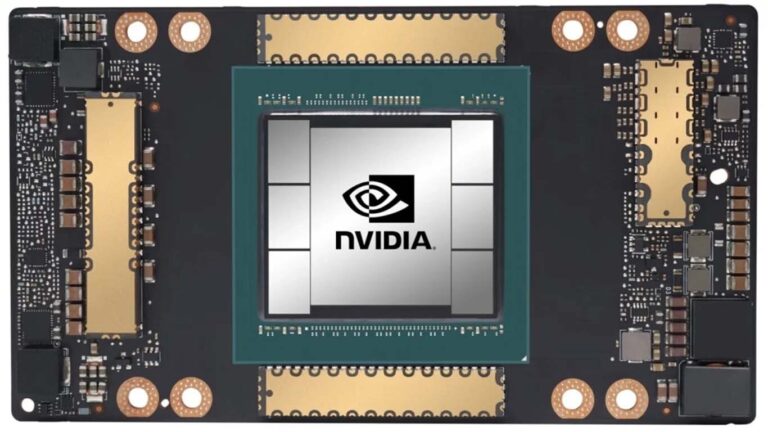
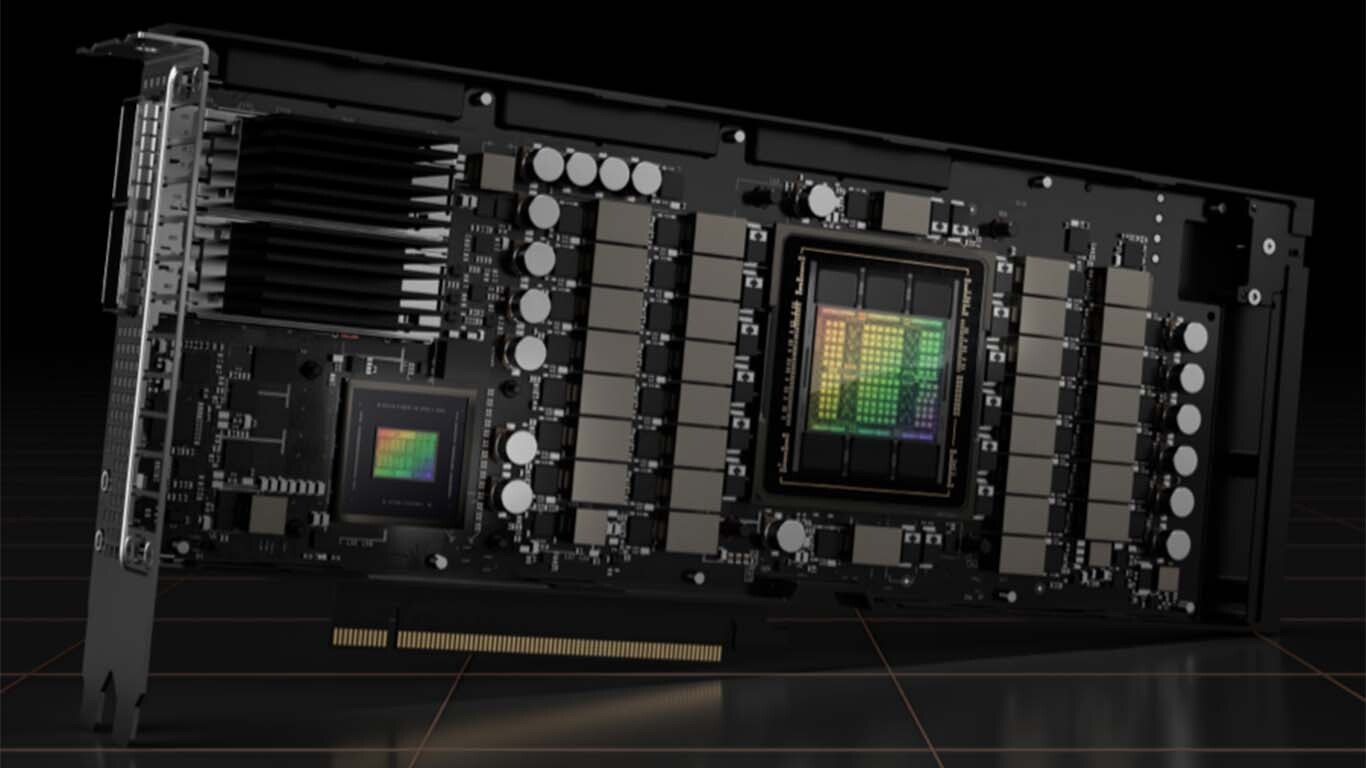
RTX-50 Series has not been confirmed nor been announced. The fans have now waited months for the new version of Lovelace graphic’s cards which is produced by Nvidia. With Nvidia’s stock soaring partly with to their involvement with the development of AI, fans have hoped that they’re going to be seeing more powerful GPUs launched soon.
RTX-50 Series release date predictions
It appears likely that Nvidia‘s next flagship graphics card series will be launched as the RTX 50 Series based on the recent naming standards of their RTX graphics cards: RTX 20-series, 30-series, and 40-series. However, they might abandon the RTX prefix, much as they did with the earlier GTX cards. Since it appears that graphics cards with Ray Tracing won’t disappear anytime soon, we aren’t anticipating that just yet.
Our estimates for the RTX-50 Series launch date are mostly based on Nvidia’s affirmation that a new graphics processor architecture will be unveiled every two years. RTX 50-series graphics cards might debut in late 2024 given that the RTX 4090 released in September 2022.
However, we’re going to be anticipating the release of a few more RTX 40-series cards before we see this. It seems doubtful that we will see RTX 50 graphics cards before we know the release date for the RTX 4070 and what the RTX 4060’s potential specifications would be.
We can anticipate improvements in performance, speed, and power with each successive generation of graphics hardware. Thus, an increase in CUDA cores and additional RT cores are certain to occur given the features that our RTX-50 series is predicted to have. WePC’s suspected specifications for the Nvidia RTX-50 Series confirm this.
It’s fantastic to see more, but in all honesty, we’d prefer to see more power. Similar to this, we anticipate improvements in DLSS performance from Tensor core technology.
RTX-50 Series price prediction
Although we don’t know the exact price of the RTX-50 Series, we can make some assumptions. The majority of gamers are furious about the price of Nvidia 40 series GPUs, which they believe to be the result of Nvidia exploiting the Covid situation to raise the costs of its GPUs since it is confident that gamers will pay it.
Hopefully, Nvidia will make the 50 series GPUs a little more affordable in response to the backlash they received when they released the RTX 40 series GPUs.
The prices of the RTX 3090 and the RTX 4090 were $1,499 and $1,599, respectively, representing a $100 price difference. If this growing tendency becomes the standard, the top-tier Nvidia RTX 50 series GPU might start at $1,699. This would seem to be the most best assumption about the price at this point given the escalating cost of materials.
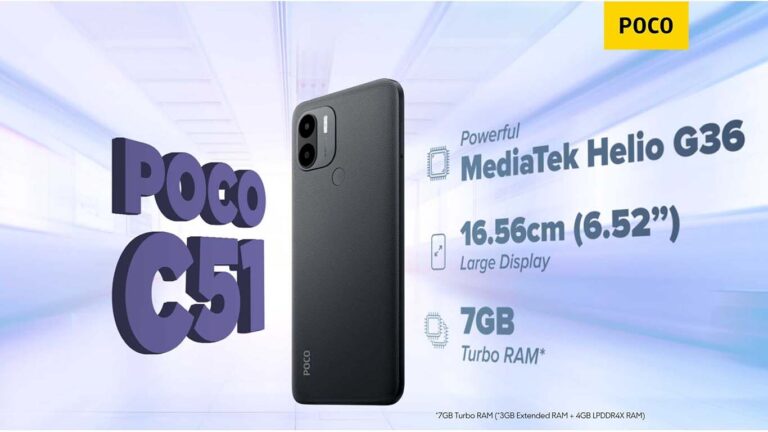
POCO C51 is a budget smartphone from POCO with MediaTek Helio G36 SoC. It is a successor to the Poco C31. It can be the best choice for users looking for a smartphone with great processer at a low budget.
Let’s dive into the specifications of the brand new POCO C51.
POCO C51 Overview;
Display And Design
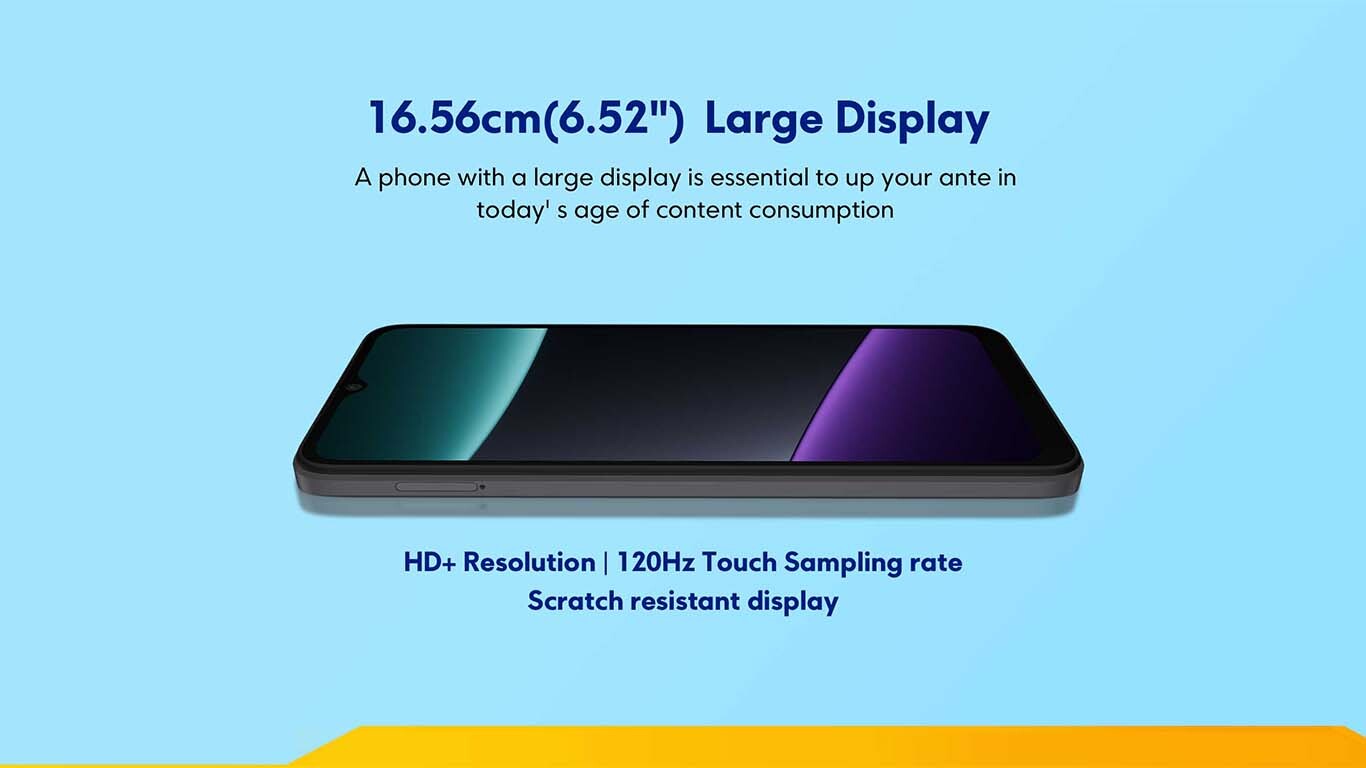
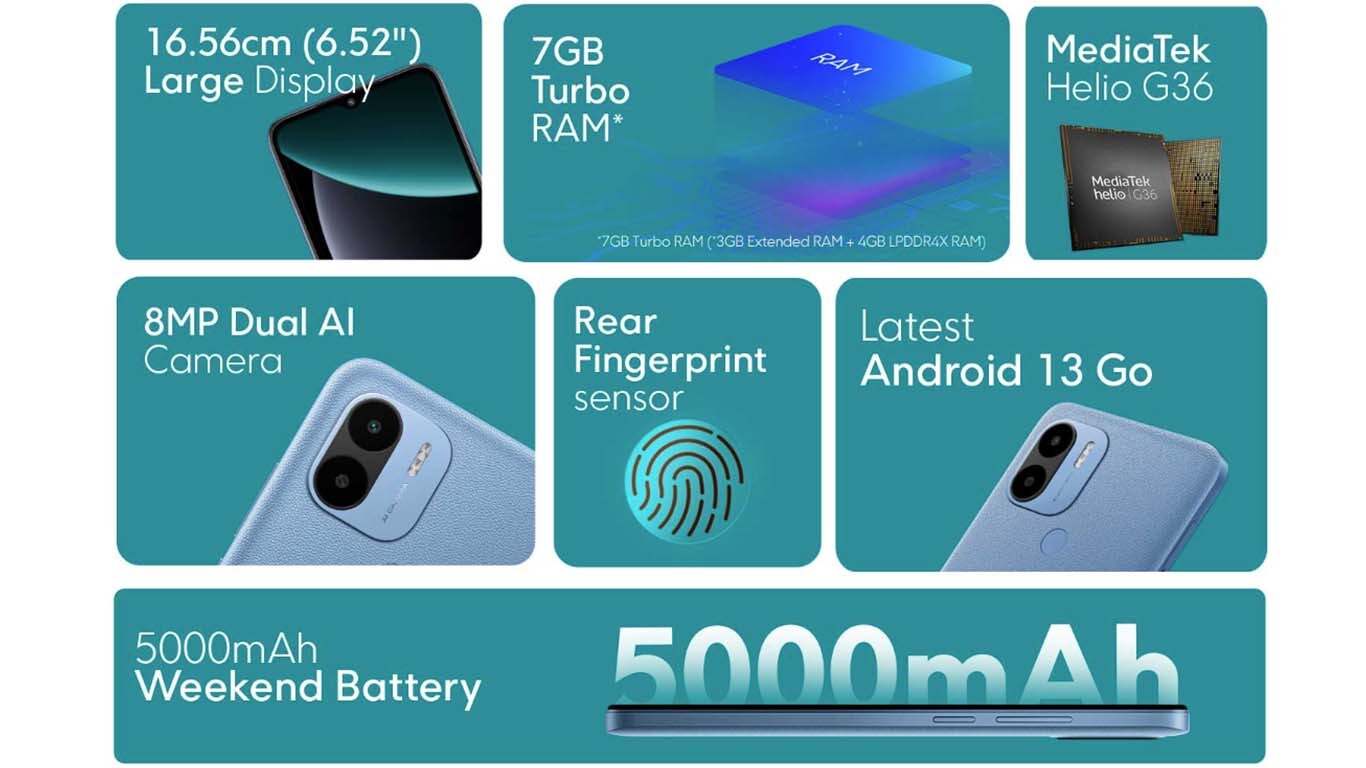
The POCO C51’s display boasts a resolution standard of HD+, with a screen size of 6.52 inches and a 20:9 aspect ratio. The touchscreen allows for easy navigation and interaction with the device, while the 1600×720 pixel resolution delivers clear and crisp visuals.
With a high pixel density of 400 PPI, the display produces sharp and vibrant colors, making it ideal for watching videos, browsing the internet, and using apps.
Camera Features
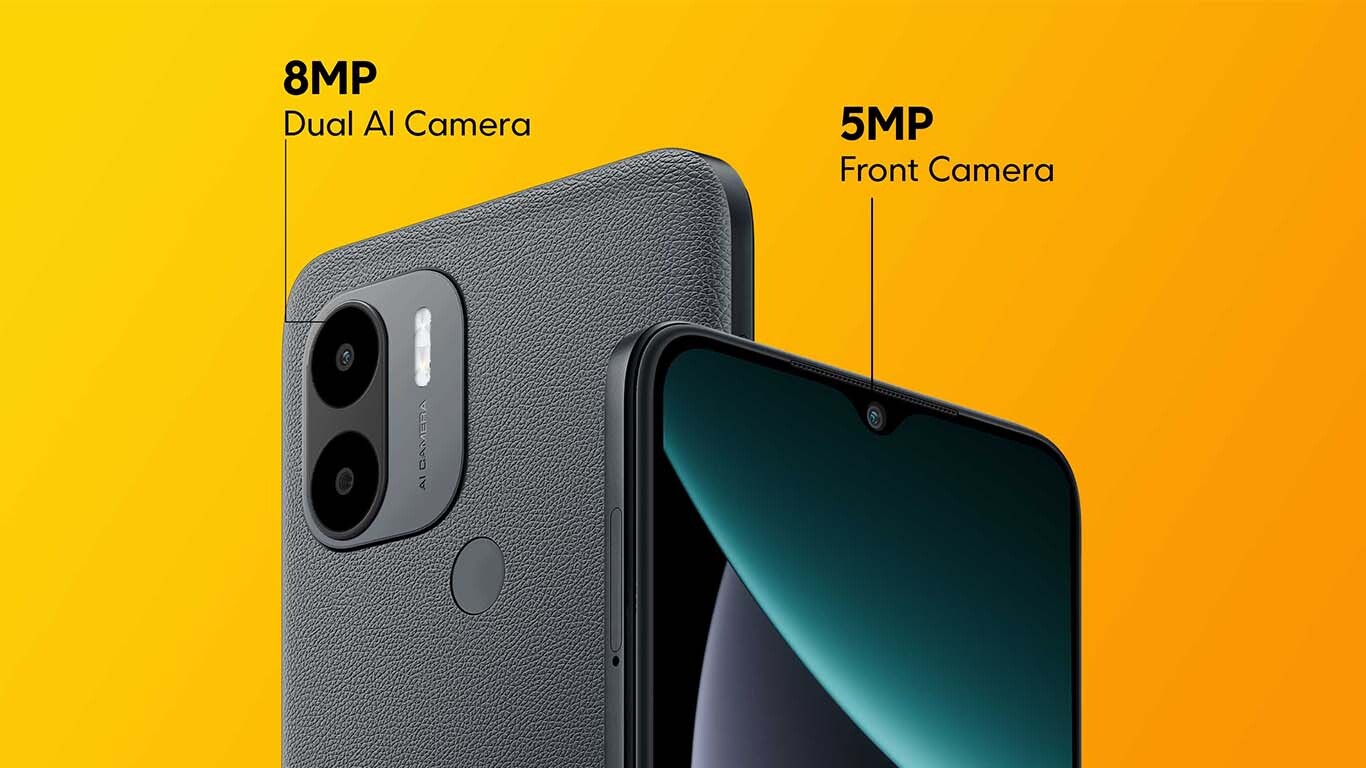
C51 features a dual rear camera setup with an 8-megapixel primary camera and an f/2.2 aperture lens. The rear cameras are equipped to capture high-quality photos and videos, even in low light conditions.
Additionally, the smartphone has a single 5-megapixel front camera with an f/2.2 aperture lens, making it perfect for capturing selfies and making video calls.
Battery
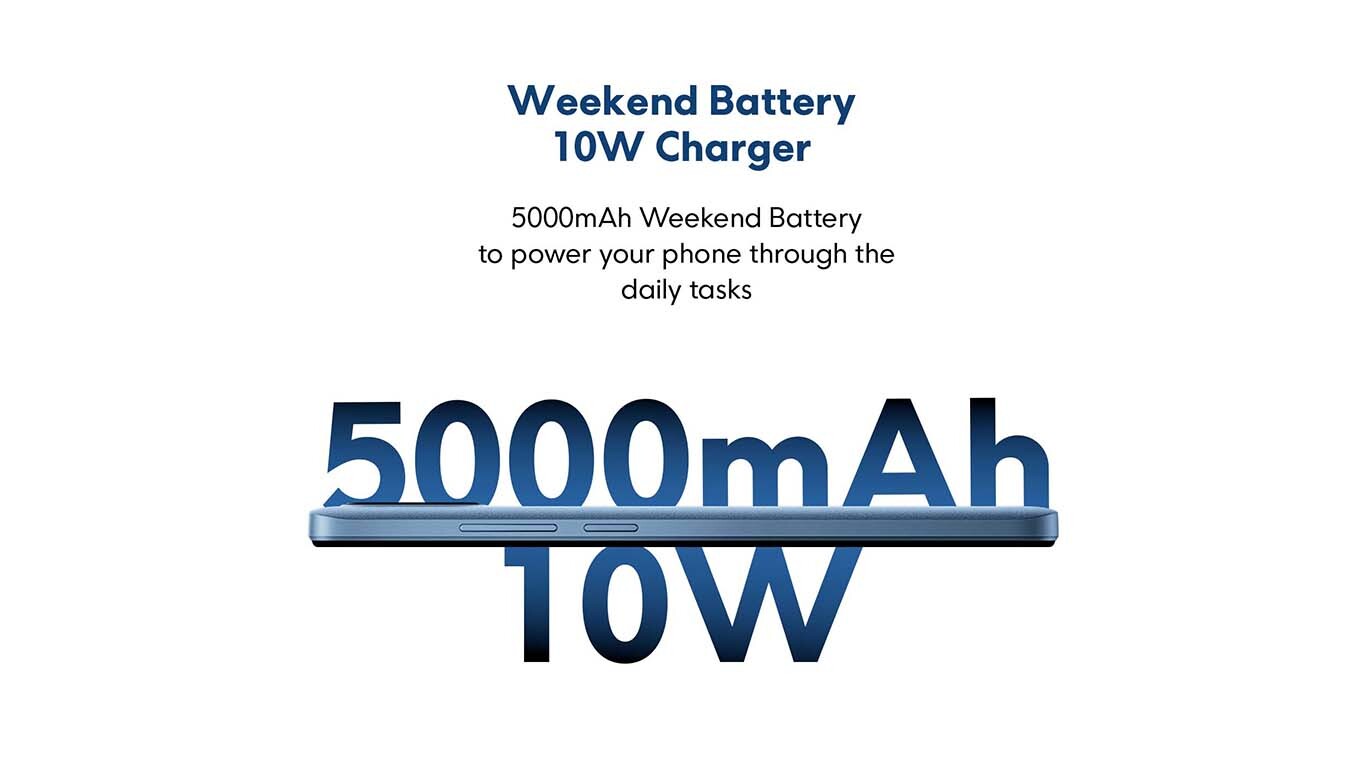
The phone’s battery has a capacity of 5,000mAh, which is a relatively high capacity and can provide long-lasting battery life. However, the fast charging technology is proprietary, which means it may not be compatible with other fast charging technologies.
Unfortunately, the phone does not support wireless charging, which may be a downside for some users who prefer the convenience of not having to plug in their device to charge.
Performance
The phone boasts an octa-core MediaTek Helio G36 processor, which should provide ample power for most tasks. With 4GB of RAM and 64GB of internal storage, users should have plenty of space for apps, media, and other files.
Additionally, the phone supports expandable storage via microSD, which can accommodate up to 1000GB of additional storage. This should be more than enough for even the most storage-intensive users.
The phone runs on the Android 13 Go Edition operating system, which is optimized for low-end hardware, so users can expect smooth performance even with these specs. Overall, the phone should provide good performance for most users.
POCO C51 has released in India, it’s price for now is INR. 8,499. We can estimate it’s staring price to be 13,999 in Nepal when it launches. We will be updating this article after we get official information. Stay Tuned!
Vivo X90 regular variant and two Pro editions make up Vivo’s newest flagship phones. Vivo has now released the X90 on the international market after making its debut in China back in November of last year.
It is the replacement for the Vivo X80 from a year ago and the most cost-effective model in the new X90 family.
Vivo X90’s main specifications, features, anticipated pricing, and availability in Nepal will all be covered in this article.
Vivo X90 Overview;
Display And Design
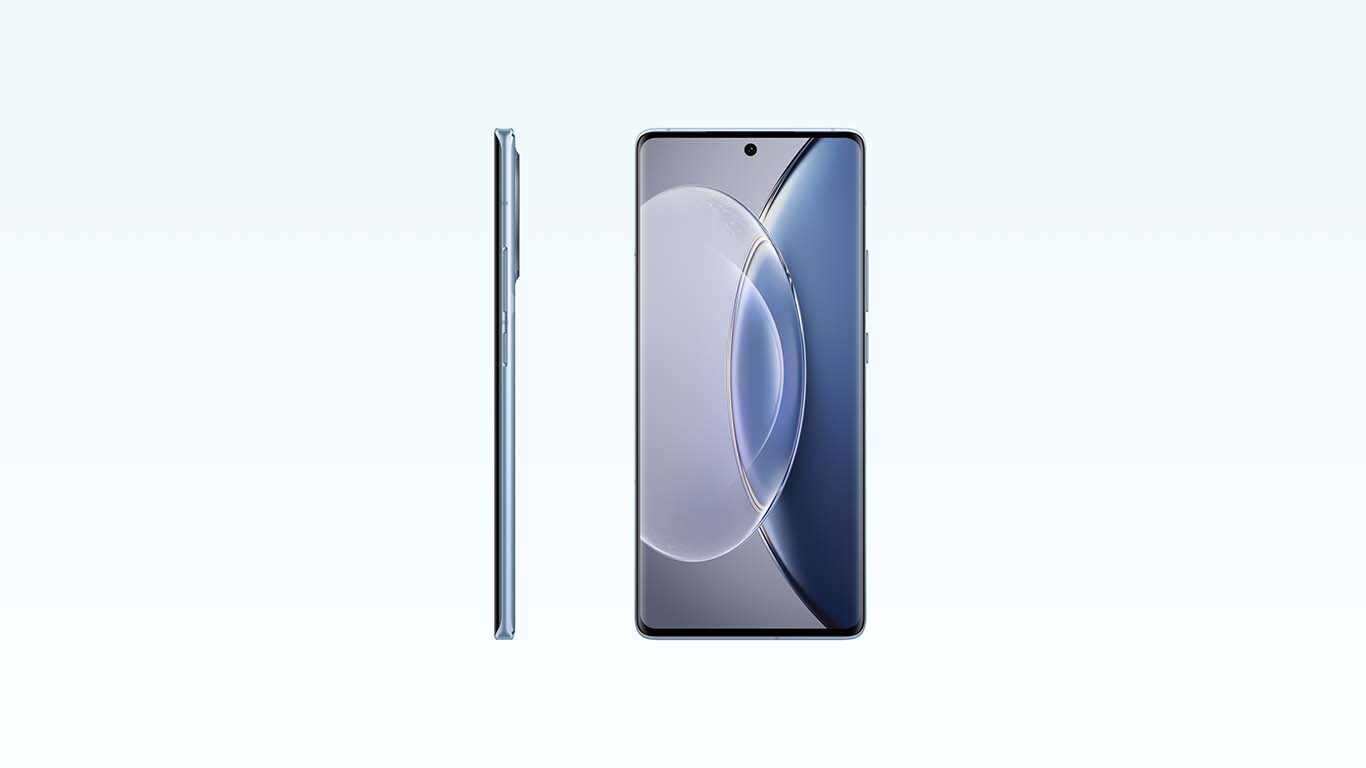
The Vivo X90’s aesthetic is strikingly similar to that of its Pro brothers. The 6.78-inch curved AMOLED panel, which refreshes at 120Hz, is still present. It can output nearly 1 billion colors thanks to its 10-bit color depth. Additionally, you receive HDR certifications and a maximum brightness of 1300 nits.
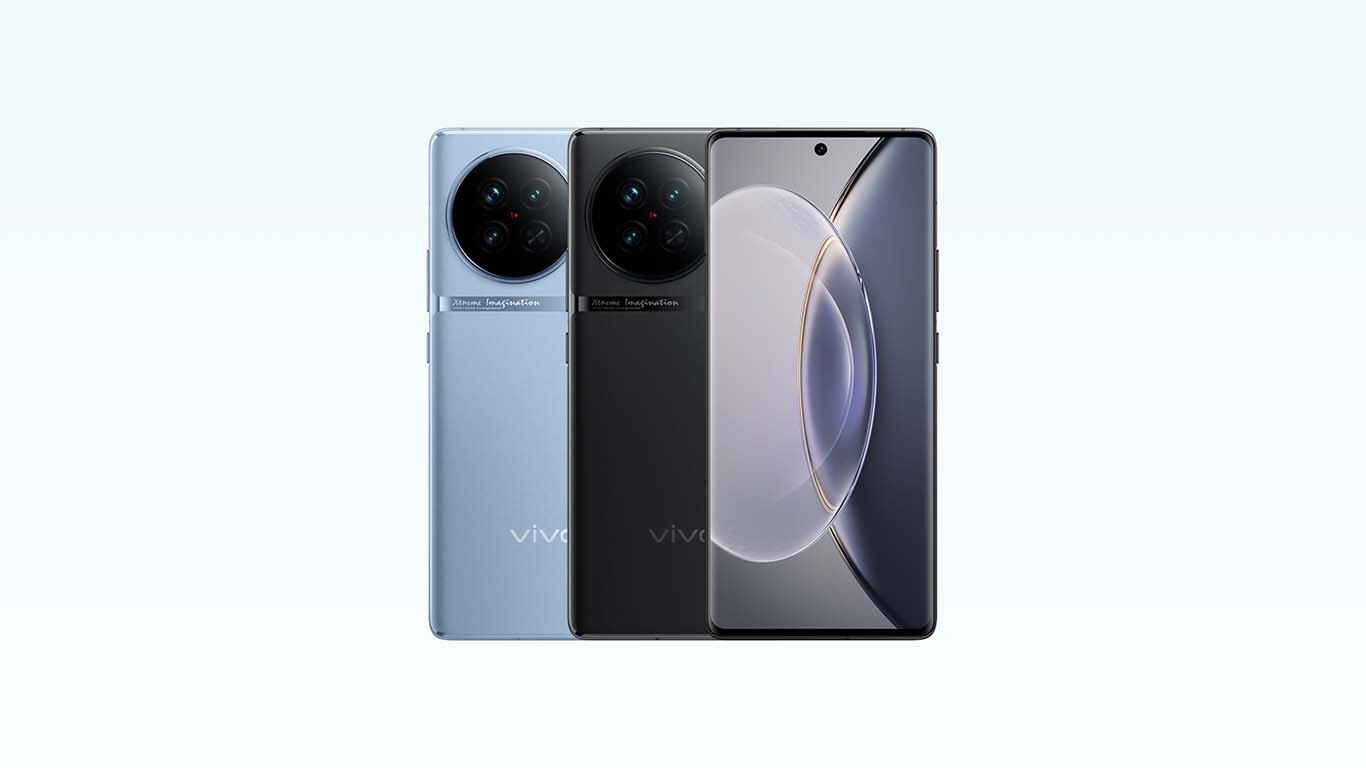
China Red, Ice Blue, and Black are the three color options for the Vivo X90. The China Red has a textured finish that resembles leather, while the latter two feature glass backs. The phone is additionally protected from dust and small water splashes by an IP64 classification.
Camera Features
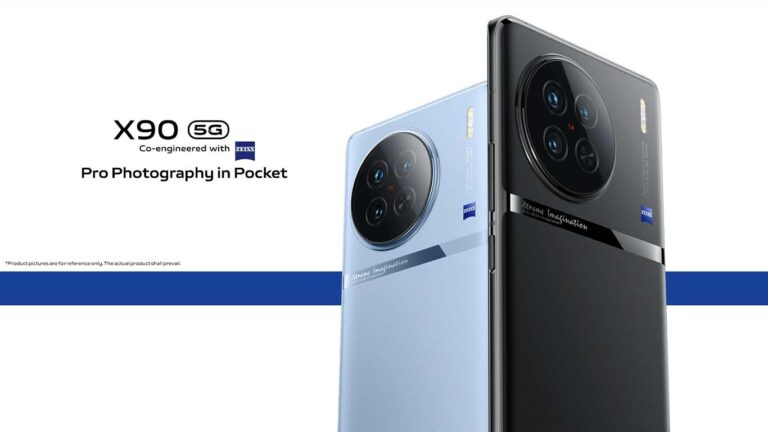
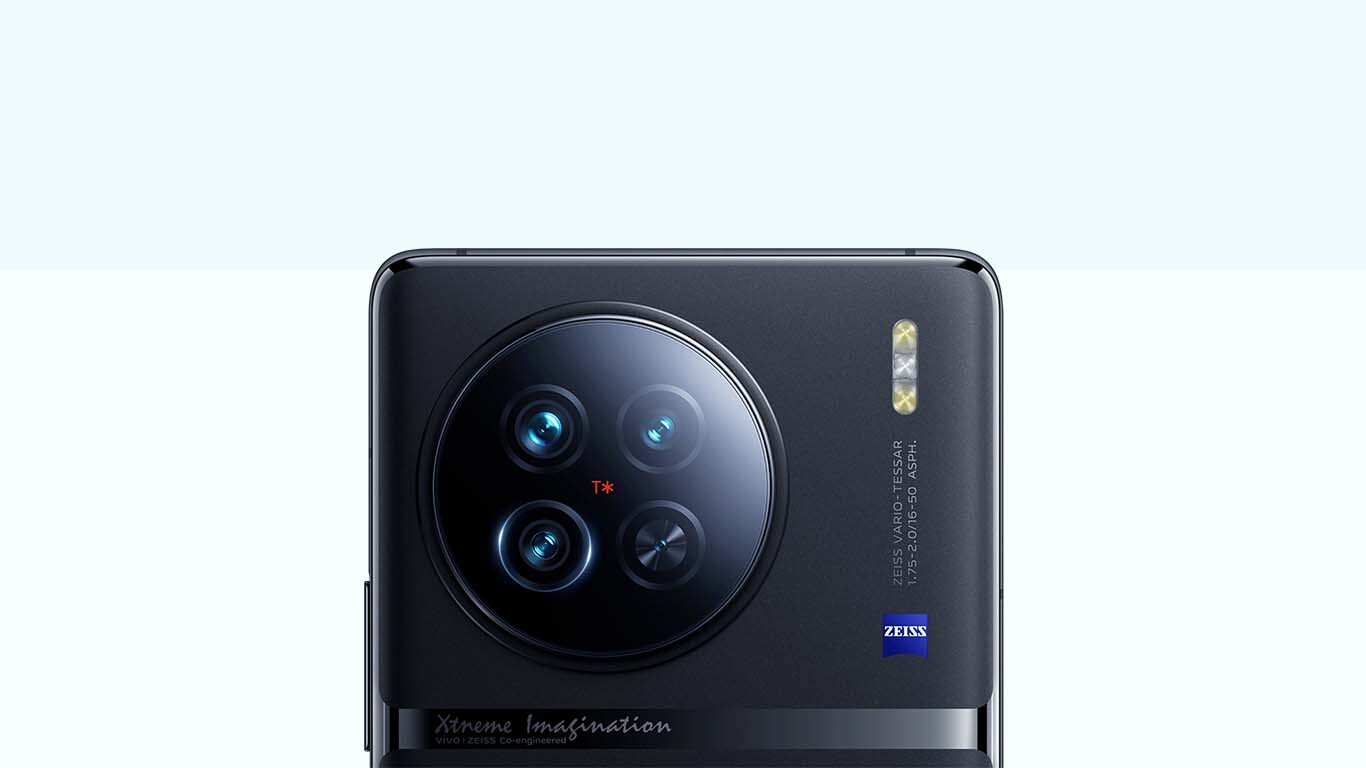
The Vivo X90’s rear has a bulging circular camera bump that houses a triple camera array. The 50MP Sony IMX866 sensor is the best in the business. A 12MP ultrawide angle module and a 12MP telephoto sensor with 2x optical zoom are attached to it. A 32MP selfie camera with a punch-hole cutout is located on the front.
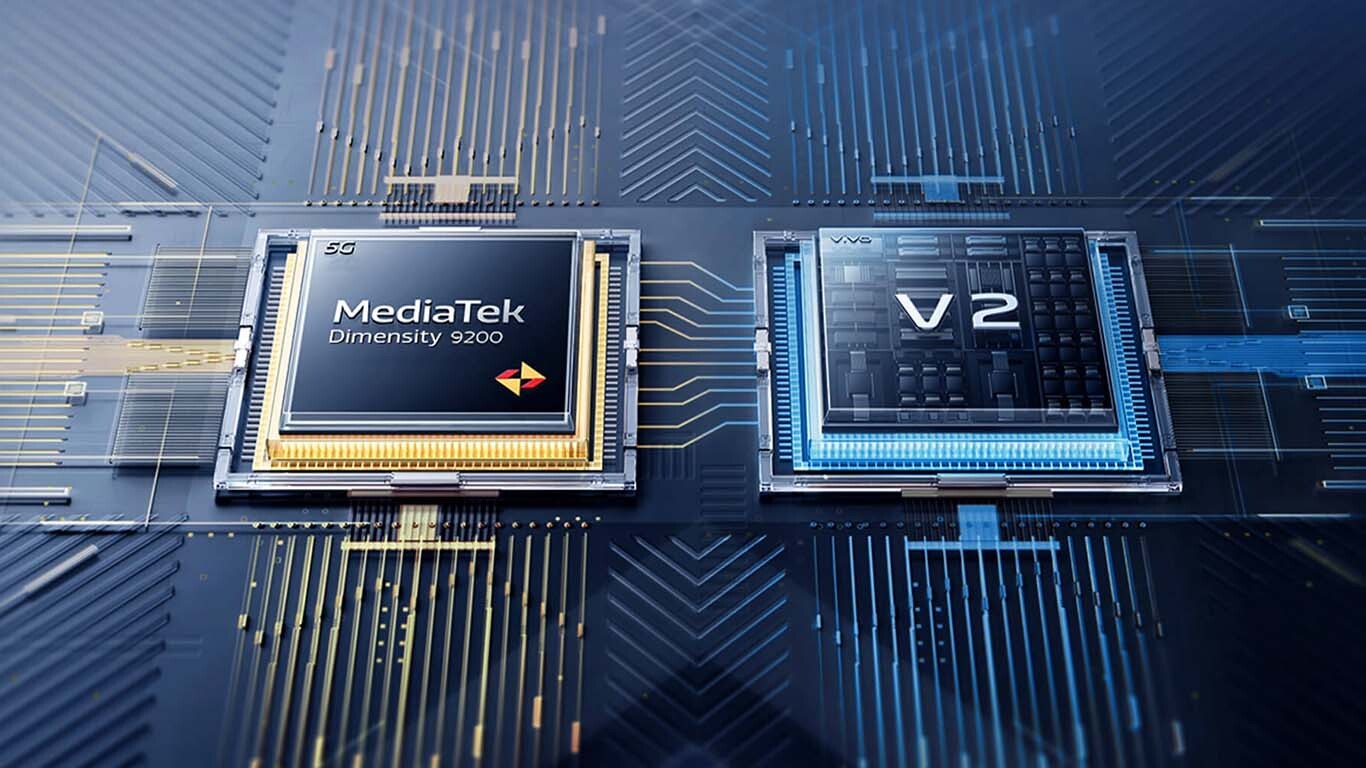
Vivo has included the V2 ISP on the X90 to aid in image processing. It is a dedicated SRAM memory for improved efficiency and is the third-generation image chip from Vivo. Overall, it will improve portrait and low-light photography on the X80.
Battery
The phone is powered by a 4,810mAh battery that supports 120W rapid charging powers the phone. The kit contains a suitable charger that charges your phone from 0% to 50% in under 8 minutes.
Performance
The Vivo X90 shares the same Dimensity 9200 processor as its Pro sibling. It is MediaTek’s most recent flagship chip, built using a 4nm technology. The new Cortex-X3 prime core and the ARM Immortalis GPU with hardware-based ray tracing are the chip’s main highlights.
The Vivo X90 comes pre-installed with OriginOS 3, an Android 13-based operating system, although its global version runs Funtouch OS 13. It’s processor is coupled with 512GB of UFS 4.0 storage and up to 12GB of LPDDR5 RAM. However, keep in mind that the 128GB model uses UFS 3.1 storage from Vivo.
Vivo X90 Specifications:
Body: 164.10 × 74.44 × 8.48/8.88 mm, 196/200 grams, IP64
The estimated price for Vivo X90 in Nepal is NPR 130,000 for now. We will be updating this article as soon as we have some information out from the company. Stay Tuned!
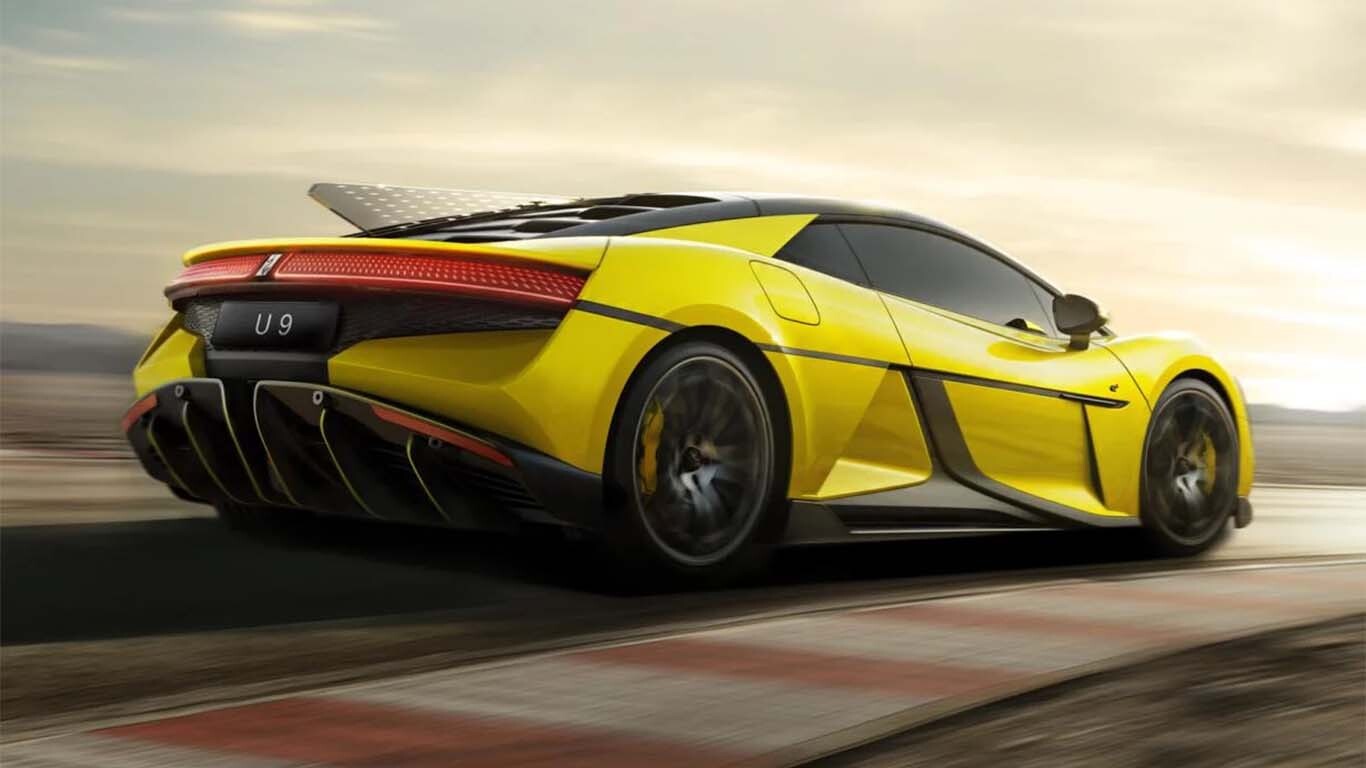
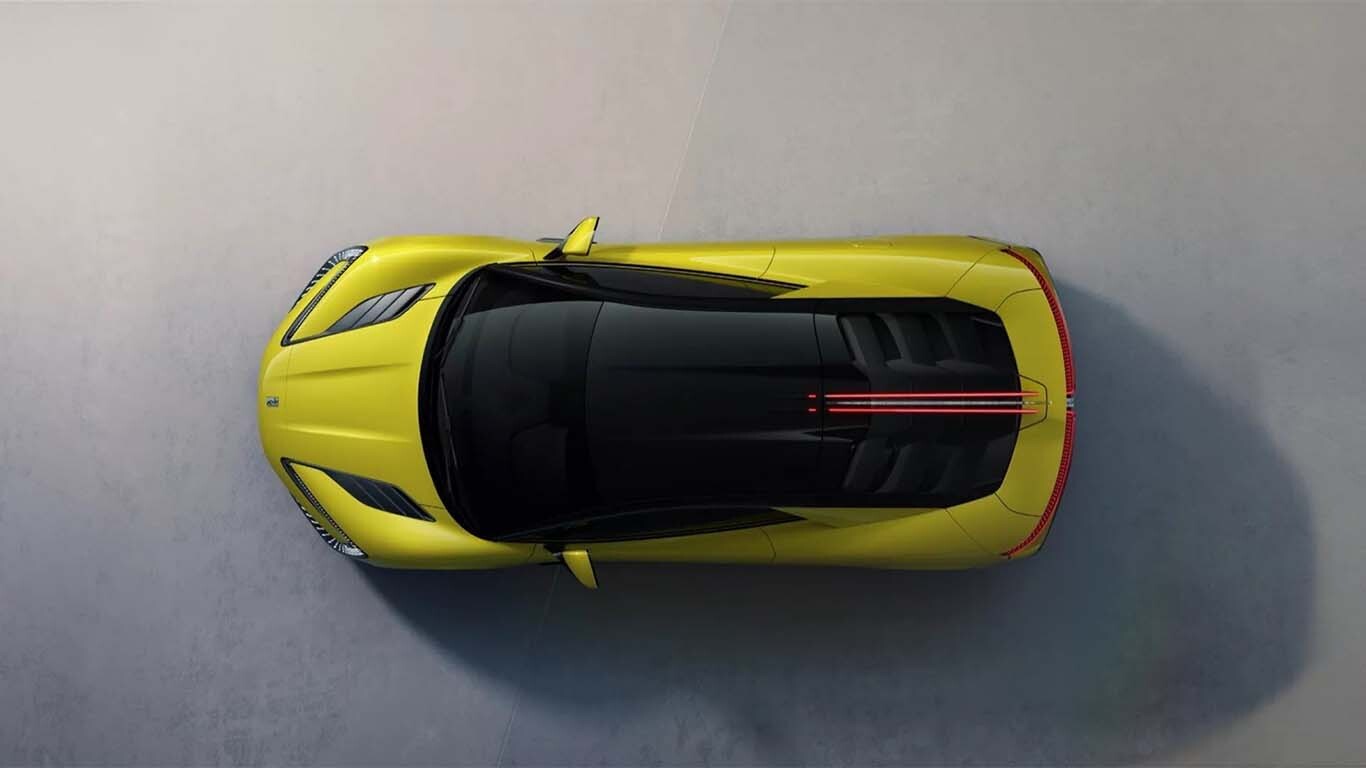
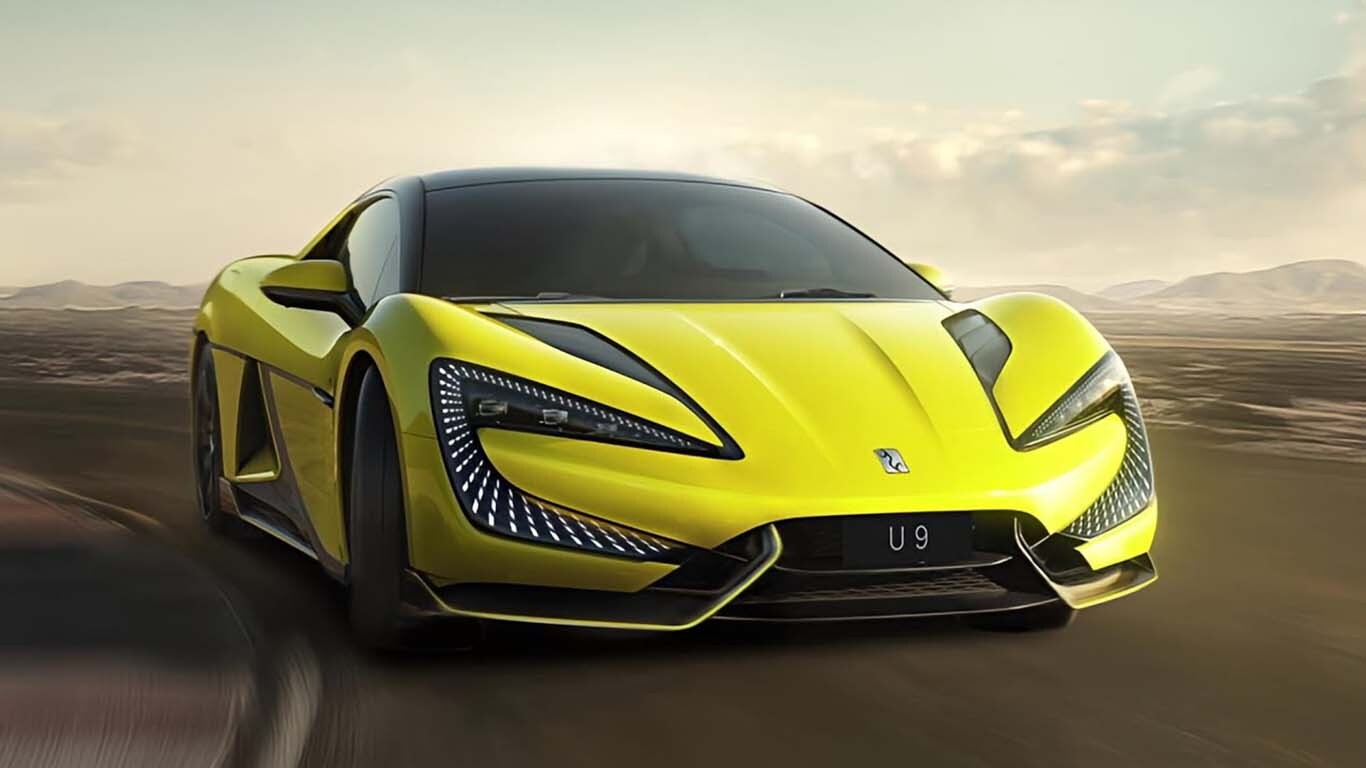
BYD’s U9 Electric Super Car is all set to launch at Shanghai Auto Show. After the launch of a car model, Yangwang has now shared pictures of it 2nd model. On its official Weibo account today, Yangwang posted three photographs of the U9 electric supercar and said that the model will be on display at the Shanghai auto show beginning on April 18.
The Yangwang U9 will be priced in the RMB 1 million ($145,400) range and can accelerate from 0 to 100 km/h in less than 3 seconds, BYD said at the time.
Yangwang’s research and development team used innovative technology to bring the U9 the ultimate safety body structure, capable of driving comfortably in the city as well as driving at the limits of the track, BYD said.
Yangwang did not provide any additional information regarding the U9, but these photos reveal several elements, like as the headlights, that have changed slightly since the car was debuted in January.
According to BYD, Yangwang’s research and development team used cutting-edge technology to give the BYD’s U9 Electric Super Car the ultimate safety body construction, allowing it to be driven both comfortably in urban areas and to the limits of the track.
BYD’s U9 Electric Super Car’s Performance
Yisifang technology is installed in the U9 in terms of performance, which is based on four separate motor drives and has revolutionized the car’s power structure. BYD claims that this technology, which can be used for pure electric and hybrid platforms and is ideal for off-road vehicles, supercars, and more, was entirely independently created.
The BYD’s U9 Electric Super Car is a four-wheel, four-motor setup and has a remarkable acceleration time of just 2 seconds from 0 to 100 kilometers per hour. Additionally, it has a blade battery, which offers a fantastic mix of power and range. Despite the U9’s current lack of details, it is obvious that BYD has put a lot of effort into building a stunning luxury automobile that will appeal to collectors and auto aficionados.
The U9 is positioned to have a big influence on the high-end automotive market because to its eye-catching look and strong performance.
According to BYD at the time, the BYD’s U9 Electric Super Car will cost around RMB 1 million ($145,400) and reach 100 km/h in less than 3 seconds.
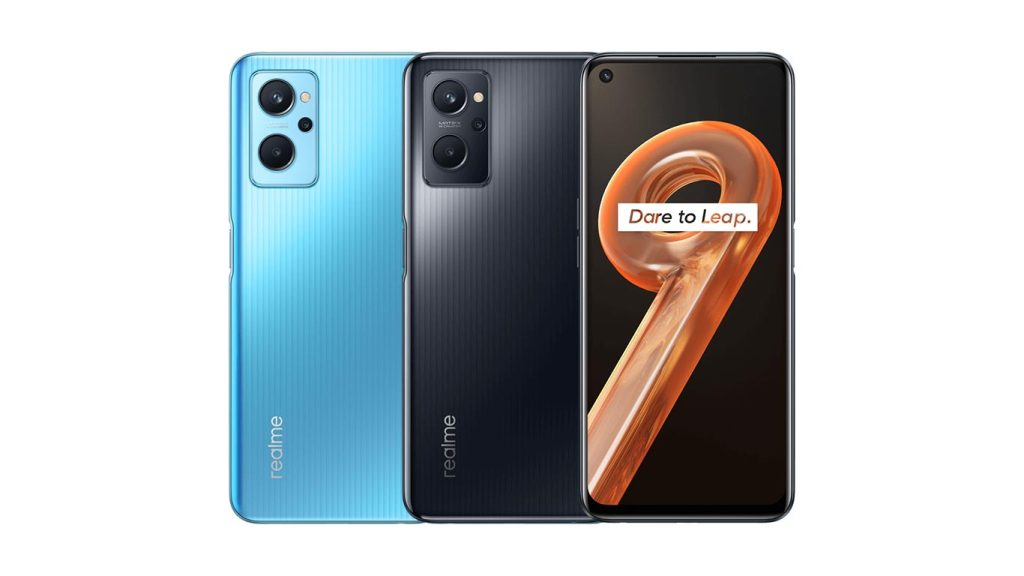
Realme began business as a sub-brand of Oppo in the South Asian market to compete with Redmi – Xiaomi’s sub-brand. It has been growing very intensely and with the tagline “Dare to Leap”, more youngsters are being attracted to the brand and hence its horizon is expanding day by day. In this post, we will be looking at all the available Realme Mobile price in Nepal.
There is all kind of mid-range and premium smartphones from Realme which are available in the Nepali market from 2019 with Jagadamba Mobiles Pvt. Ltd. However, after a setback for a few months, it re-entered the market in August 2021 with Shanker Group. It also has over 30 different companies across 14 sectors under Shanker Group which is looked over by Madhav Sheth. It has also moved its way up to the second-biggest smartphone brand in Nepal by 2023.
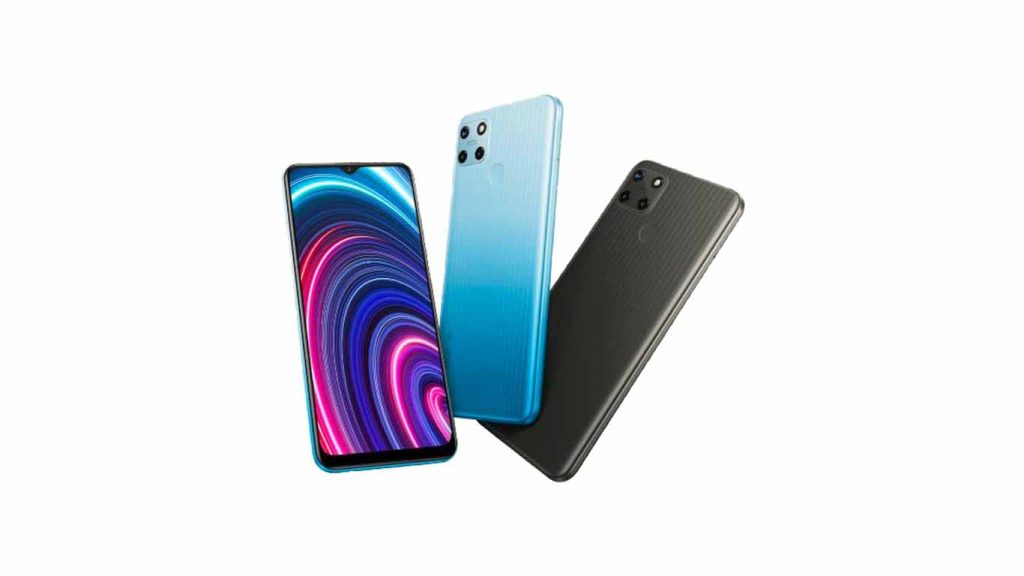
The Realme C30s carries over the design elements from the original C30. It has flat frames and a camera bump that looks similar and contains an 8MP camera. The Realme C30s’ 6.5-inch HD screen on the front features a waterdrop notch that houses a 5MP selfie camera. Inside, the T612 has been replaced by the Unisoc SC9863A.
The phone has a 5,000mAh battery that can enable 10W charging. The phone also comes pre-installed with Android 12 Go.
Realme C30s Specifications:
Display: 6.5-inches HD+ IPS LCD panel
Memory: Up to 4GB RAM, Up to 64GB storage (expandable)
Software&UI: Realme UI Go on top of Android 12
Rear Camera: 8MP
Front Camera: 5MP
Battery: 5,000mAh, 10W fast charging, micro USB
Price in Nepal: Rs. 13,499 (2/32GB) | Rs. 15,999 (4/64GB)
Realme C33
Due to its sparkly appearance, the Realme C33 resembles the more costly 9i 5G quite a bit. The phone weighs about 187 grams and has a thickness of 8.33m. It has a 120Hz touch sampling rate 6.5-inch HD+ LCD screen. You get Unisoc T612 behind the hood, along with up to 4GB of RAM and 64GB of expandable storage. The device is powered by Android 12 with Realme UI S.
You get a 50MP primary camera and a portrait lens in a dual-camera system on the rear. There is a 5MP selfie camera on the front. The Realme C33 has a 5,000mAh battery and 10W charging.
Memory: 3/4GB LPDDR4X RAM, 32/64GB UFS 2.2 (Expandable up to 1TB)
Software& UI: Android 12 with Realme UI S on top
Rear Camera: Dual; 50MP primary + Portrait lens
Front Camera: 5MP
Battery: 5000mAh with 10W Charging
Price in Nepal: Rs. 16,499 (3/32GB) | Rs. 18,499 (4/64GB)
Realme 9i 5G
The 5G version of the aforementioned 9i is called the Realme 9i. The chipset is where the two phones’ main differences lie. Dimensity 810 (5G), a 6nm chip with an integrated 5G modem, powers the Realme 9i 5G. The chip is coupled with 128GB of storage and 6GB of RAM. The phone’s operating system, Realme UI 3.0, is based on Android 12.
It has a 6.6-inch, 90Hz screen on the front, with a notch at the top for the 8MP selfie camera. The fingerprint scanner is on the side because it has an LCD screen. A 50MP primary camera, a 2MP portrait camera, and a 2MP macro camera make up the triple camera arrangement on the rear. A 5,000mAh battery powers the phone, which also supports 18W wired charging.
The MediaTek Helio G99 chipset in the Realme 10—its successor to the Realme 9—brings a consistent improvement in performance. For instance, the smartphone outperformed the Realme 9 by 382,000 points on our Antutu test. This performance boost applies to both regular use and gaming. The SoC is paired with 128GB of storage and up to 8GB of RAM.
With an 8mm thickness and 178 g weight, the Realme 10 is a similarly thin and light smartphone. The brand refers to this style as Light Particle because it features flat edges, a shimmering back, and a gradient look. Clash White and Rush Black are the two colors available for the phone.
A 6.4-inch AMOLED display with a refresh rate of 90Hz and a touch sampling rate of 180Hz is located on the front. Realme chose to use a side-mounted fingerprint scanner even though the display is AMOLED. The smartphone features a 5000mAh battery as well, which is recharged via a 33W adaptor.
Resolution: FHD+ (2400 x 1080 pixels), 20:9 aspect ratio, 409 PPI
Chipset: MediaTek Helio G99 (6nm)
Memory: 4/6/8GB LPDDR4X RAM, 128GB/256GB storage
Software&UI: Realme UI 3.0 on top of Android 12
RearCamera: Dual; 50MP primary + 2MP macro
Front Camera: 16MP
Battery: 5000mAh with 33W charging
Price in Nepal: Rs. 29,999 (8/128GB)
Realme 10 Pro+
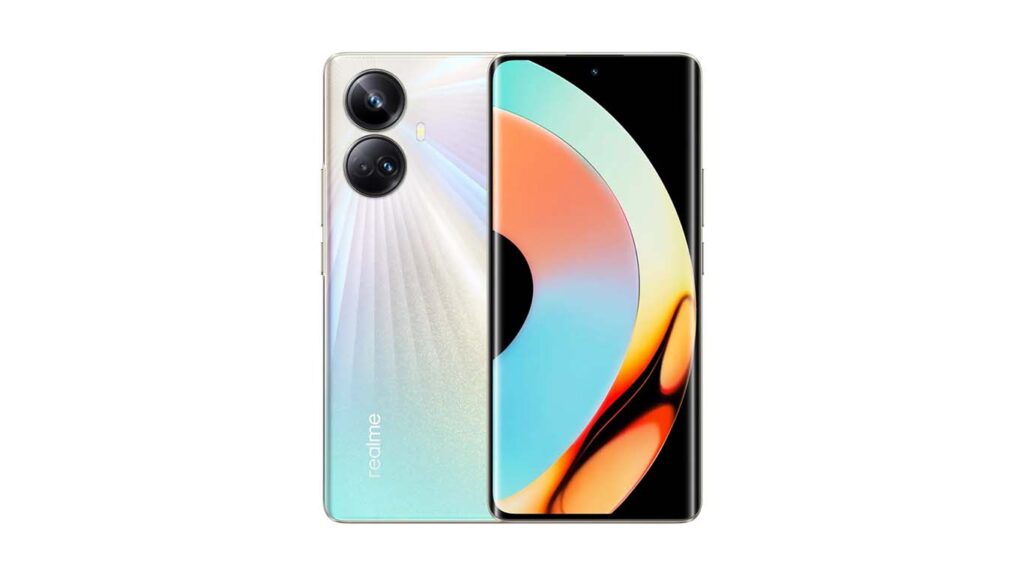
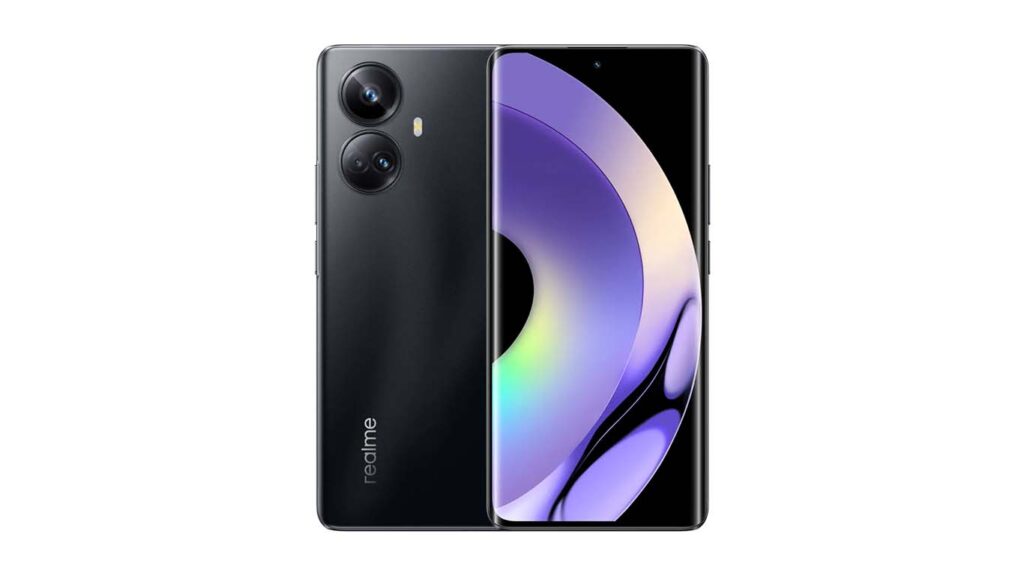
Realme 10 Pro+ takes a different approach from its predecessor, which was praised for having excellent camera setups. This phone’s “flagship grade” display, which Realme advertises, is its key selling point. Its curved AMOLED display makes it the first Realme phone to have one. The 6.7-inch screen has a 120Hz refresh rate, 2160Hz high-frequency dimming, 10-bit color depth, and an 800 nits maximum HDR brightness.
The phone’s Dimensity 1080 5G processor runs on 8GB of RAM and 128GB of storage. A 108MP primary camera, an 8MP ultrawide lens, and a 2MP macro lens make up the triple camera arrangement on the back of the device. The phone has a 5,000mAh battery and 67W charging is supported.
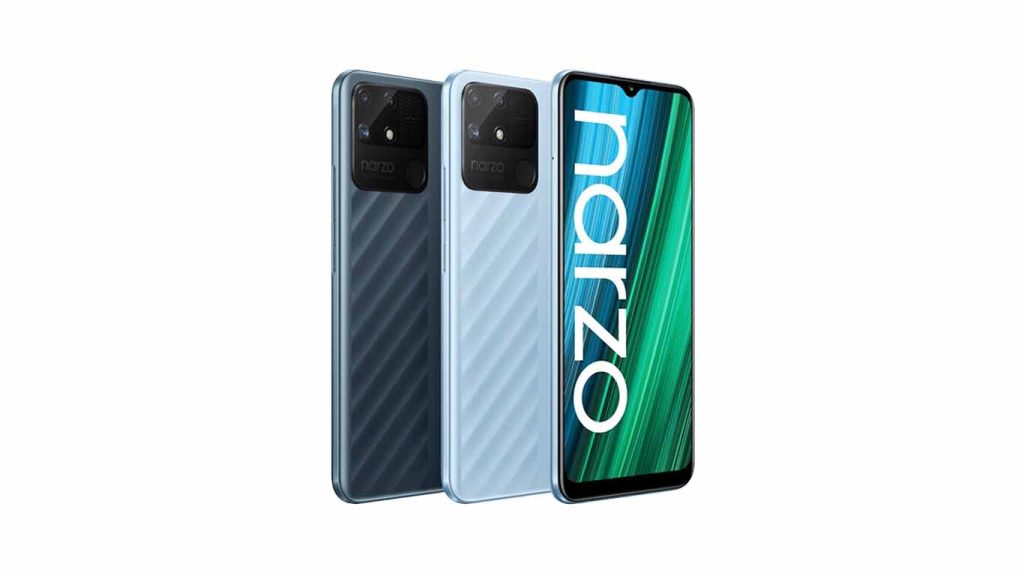
Compared to the standard Narzo 50A, the Realme Narzo 50A Prime includes a redesigned design and a few minor specification updates. In comparison to its non-Prime sister, the 6.6-inch FHD+ screen is bigger, clearer, and even brighter. While keeping the rough look inspired by Kevlar, it adds a new camera bump and a side-mounted fingerprint scanner.
Thus, the performance specifications of the Narzo 50A Prime have been reduced. Although it has the same CPU arrangement as the Helio G85, the Unisoc T612 utilized in the phone has half as many GPU cores. The cores are also capped at 1.8GHz. Additionally, the phone only has a 5,000mAh battery to power it. The manufacturer initially did not offer an appropriate charger in the box, however the device is charged with an 18W charger.
However, Realme subsequently developed a 50A Prime variant that comes with a charger, which clearly costs a little bit more.
Without charger: Rs. 20,299 (4/64GB) | Rs. 21,799 (4/128GB)
With charger: Rs. 20,999 (4/64GB) | Rs. 22,499 (4/128GB)
Realme Narzo 50
The Realme Narzo 50 sports a 6.6-inch IPS LCD panel with a 120Hz refresh rate. It has 1080×2412-pixels resolution and the pixel density here measures 400. Likewise, the screen-to-body ratio and aspect ratio is 84.6% and 20:9 respectively. As per the design, we can also safely say that Realme Narzo 50 is a rebranded version of Realme 8i which is already available in Nepal. They both weigh 194 grams and embed the dimension of 164.1×75.5×8.5mm. They are so similar that even their camera bump is identical. The device has a glass front while the frame and back are made up of plastic. It is also available in two color options – Speed Blue and Speed Black.
Powering the device is a MediaTek Helio G96 chipset based on a 12nm manufacturing process. It integrates an octa-core CPU with two Cortex-A76 and six Cortex-A55 cores clocked at the speed of 2.05GHz and 2.0GHz respectively. This is also one of the decent Realme mobile in Nepal with a reasonable price. Despite the faster refresh rate and high-res cameras in the device, the Mali-G57 MC2 graphics processor here is compromised since it’s weaker than Helio G95’s Mali-G76 MC2. This is also one of the decent Realme mobile in Nepal with a reasonable price.
Realme Narzo 50 price in Nepal: – Rs. 26,999 (6+128GB)
Realme C11 2021
The Realme C11 2021 flaunts a 6.5-inch LCD panel with HD+ resolution. Above the screen lies a waterdrop notch that holds the selfie snapper. There is also a thick chin as we see on most budget phones these days. If we talk about design, the C11 2021 is very similar to the C20 but with different inside integrations. There are two color options on the handset – Lake Blue and Iron Grey.
Powering the Realme C11 2021 is the Unisoc SC9863 chipset based on a 28nm manufacturing process. It integrates two sets of Cortex-A55 cores clocked at the speed of 1.6GHz and 1.2GHz. Likewise, the graphics part is handled by the PowerVR GE8322 processor. On the software front, Android 10 Go Edition also runs on top of the Realme UI. It also has 2GB LPDDA4x RAM coupled with 32GB internal storage of eMMC 5.5. The latter is also expandable via a dedicated microSD card slot.
The Realme C21Y flaunts a 6.5-inch display with HD+ resolution and 400nits of peak brightness. The device boasts a screen-to-body ratio of 88.7% while the aspect ratio remains 20:9. Above the screen, there also lies a teardrop cutout that holds the front-facing camera. The phone has a glossy finish at the rear panel which also integrates triangular patterns. There are two color configurations for the Realme C21Y – Cross Blue and Cross Black.
Under the hood, the device is powered by an octa-core Unisoc T610 processor based on a 12nm manufacturing process. The CPU also has a maximum clock speed of 1.8GHz. Likewise, the graphics are handled by Arm’s Mali G52 processor. As per memory, it also has two RAM options – 3GB and 4GB paired with 32GB and 64GB of internal storage. The latter can also be expanded up to 256GB via a dedicated microSD card slot. On the software front, there is Android 11 lying on top of Realme UI.
The new Realme C25Y sports a 6.5-inch IPS LCD with HD+ resolution. It also boasts 420nits of brightness level. There is a textured pattern on the rear panel which is wholly built on plastic. There lies a square camera module and a fingerprint sensor on the panel. Further, you can have two color options to choose from – Glacier Blue and Metal Grey.
Powering the C25Y is an octa-core Unisoc T610 chipset based on a 12nm manufacturing process. It also integrates two Cortex-A75 and six Cortex-A55, all clocked at 1.8GHz. Likewise, the graphics depart is handled by Arm’s Mali-G52. As per memory, it also has two configurations to choose from – 4/64GB and 4/128GB of eMMC 5.1. On the software front, there is Android 11 running on top of Realme UI R. The latter is also rumored to make the phone slightly difficult to use.
Another C-series phone that is offered in Nepal is the C30. The design is without a doubt its most remarkable aspect. The phone sports a large bump for the 8MP camera and a striped pattern on the rear. The C30 has a 6.5-inch HD+ screen with a 120Hz touch sampling rate, to talk about its specifications.
The phone has three different memory options and is powered by the Unisoc T612 processor. It utilizes Android 11 and Realme UI Go. It has a 10W charging, 5,000mAh battery.
The Realme C31 is the C21’s replacement. It has a waterdrop notch on its 6.5-inch HD+ screen for the 5MP selfie camera. It sports a 13MP primary camera on the rear, along with a macro and monochrome lens.
At the front and back designs for the Realme C31, it has the Tiger T612 chipset from Unisoc inside. The processor has 64GB of internal storage and 4GB of RAM. A 5,000mAh battery powers the phone and supports 10W charging through the microUSB connector.
Realme C31 Specifications:
Display: 6.5-inches HD+ LCD panel, 60Hz
Chipset: Unisoc T612 4G (12nm)
Memory: 4GB LPDDR4X RAM, 64GB UFS 2.2 storage (expandable up to 1TB)
Software & UI: Android 11 with Realme UI R edition
Rear Camera: Triple; 13MP + Macro + Monochrome
Front Camera: 5MP, f/2.0 (notch)
Battery: 5000mAh (10W microUSB charging)
Price in Nepal: Rs. 17,799
Realme C35
The new Realme C35 sports a 6.6-inch IPS LCD screen with the standard 60Hz refresh rate and 180Hz touch sampling rate. It also boasts 1080×2408-pixels capacity alongside a 20:9 aspect ratio and 401 PPI density. Further, there is a peak brightness level of 600nits. The phone also weighs 189 grams and embeds a dimension of 164.4×75.6×8.1mm. It is built from plastic as per the frame and back, but the front is made of glass. Unlike the other C-series lineups, this handset flaunts flat edges with round corners. There are two color options available for the model – Glowing Black and Glowing Green.
Powering the device is a Unisoc T616 chipset based on TSMC’s 12nm fabrication process. It integrates two Cortex-A75 and six Cortex-A55 cores clocked at 2GHz and 1.8GHz respectively. Likewise, the graphics depart is handled by Arm’s Mali-G57 processor. As per memory, there is a single RAM configuration of 4GB coupled with either 64 or 128GB internal memory of UFS 2.2. On the software front, Realme C35 also boots on Android 11 on top of Realme UI 2.0.
The Realme C55 is the company’s first C-series smartphone for 2023, and the Mini-Capsule notch up front is its standout feature. This notch, which was inspired by the Dynamic Island on the iPhone, may show information like as charging status, low battery alerts, data consumption, step count, and walking distance.
Similar to that, this display’s 6.72-inch IPS panel has a 90Hz refresh rate and a 180Hz touch sampling rate. The phone’s MediaTek Helio G88 CPU is combined with up to 128GB of eMMC 5.1 storage and 8GB of LPDDR4X RAM.
The Realme Narzo 50i sports a 6.5-inch LCD panel with HD resolution and a standard refresh rate of 60Hz. It also has a maximum brightness level of 400nits and a pixel capacity of 1600×720. As per the design, there is a dual-tone finish on the back while two-third of the smartphone has diagonal stripes. However, the remains from the latter have a very clean and smooth finish. Further, there is a rectangular camera bump accompanied by a speaker grille.
Under the hood, the Narzo 50i is also powered up with a Unisoc SC9863A chipset with an octa-core CPU cores clocked at the maximum speed of 1.6GHz. Likewise, the graphics depart is handled by IMG 8322 processor. And if we also talk about memory, it has two variations – 2/32GB and 4/64GB.
The Realme Narzo 50A flaunts a 6.5-inch LCD with HD+ resolution. It also boasts 400nits of typical brightness and 570nits of peak brightness. The back panel also has a very smooth and textured finish with Narzo branding giving the device a dual-tone look. It also has a square camera module slightly above the rear-mounted fingerprint scanner.
Powering the device is a MediaTek Helio G85 chipset based on a 12nm manufacturing process. This is the same processor used in Realme Narzo 30A which means the performance level stays the same as before with no upgrades. The processor is paired with 4GB RAM with an option of either 64GB or 128GB internal storage. It can also be expanded up to 256GB via a dedicated microSD card slot.
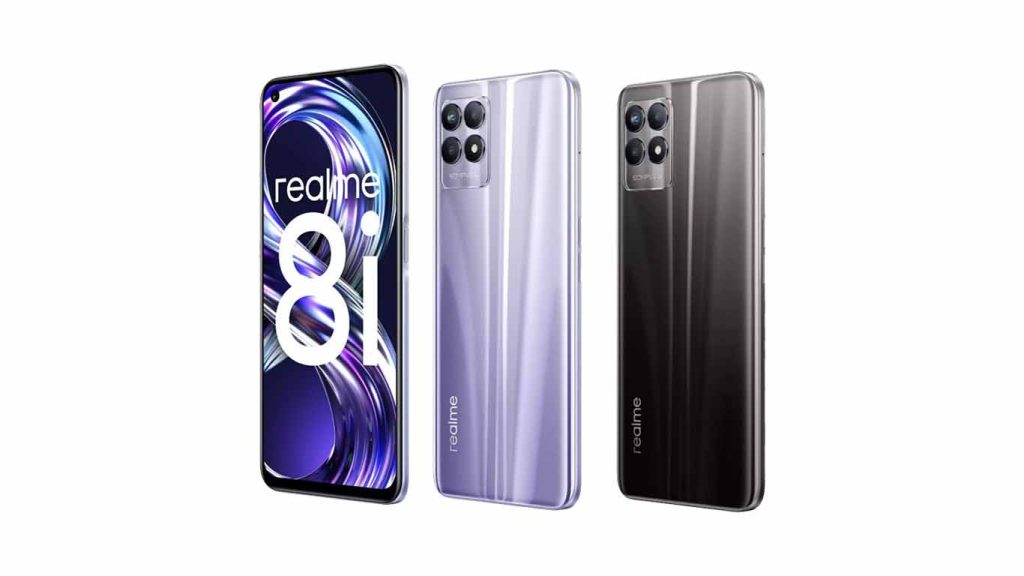
The Realme 8i features a 6.6-inch IPS LCD with a very high refresh rate of 120Hz and a touch sampling rate of 180Hz. The former is very flexible within six different levels. Not to forget, this is the first Realme phone to have 1 nit of brightness level with also 600 nits of peak brightness. As per the design, there is a rectangular camera setup at the rear panel of the 8i while the punch-hole cutout stays above the screen holding the selfie snapper. The handset measures 195 grams while measures 8.5mm in thickness. The two-color variations available in the model are – Space Black and Space Purple.
Powering the phone Realme 8i is MediaTek Helio G96 based on a 12nm manufacturing process. The chipset also made its debut with the same phone. It also boots on Realme UI 2.0 on top of Android 11 on the software front. This is also one of the decent Realme mobile in Nepal with a reasonable price. Memory side, it has 4GB and 6GB RAM configurations coupled with 64GB and 128GB memory respectively. Like the Realme 8s 5G, the 8i features “DRE Technology” for virtual RAM expansion up to 5GB.
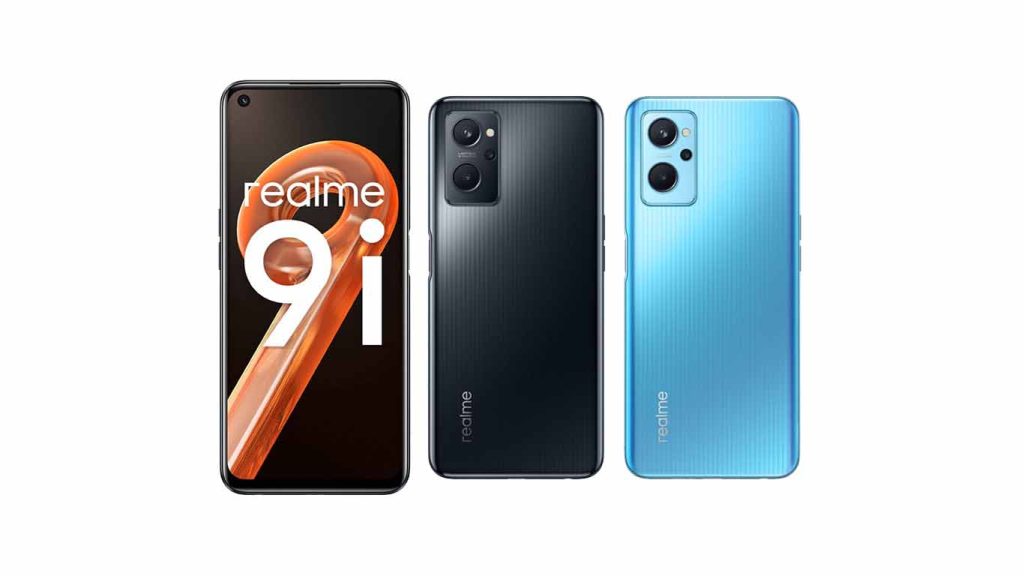
The Realme 9i flaunts a 6.6-inch LCD with Full HD+ resolution and a flexible refresh rate of 90Hz. This is a huge downgrade from its successor 8i which had a 120Hz of standard refresh rate. Further, it has a typical brightness level of 480nits and a touch sampling rate of 180Hz. The screen also gets its protection from Dragontrail Pro Glass. The handset also has over 3,000 machined lines coming together to form the prism texture on the rear panel. It also has an 8-layer optical coating process for visual effects as well. Here, the back and frame of the phone are plastic-made whereas the front is made of glass. It weighs 190 grams and embeds the dimension of 164.4×75.7×8.4mm. You can choose from two color options – Black and Blue.
Powering the device is Qualcomm Snapdragon 680 based on a 6nm manufacturing process. Previously, there was MediaTek Helio G96 on its predecessor. But now this chipset integrates an octa-core CPU with four Kryo 265 Gold cores and four Kryo 365 Silver cores clocked at the speed of 2.4GHz and 1.9GHz respectively. Likewise, the graphics part is handled by Adreno 610 processor. As per memory, there are three configurations – 4/64GB, 4/128GB, and 6/128GB of UFS 2.1. You can also expand the internal storage with the help of a dedicated microSD card slot. This is also one of the decent Realme mobile in Nepal with a reasonable price. On the software front, the phone boots on Android 11 on top of Realme UI 2.0. However, Realme has already started Android 12 alongside Realme UI 3.0. This is also one of the decent Realme mobile in Nepal with a reasonable price.
Let’s start with the display – there is a 6.4-inches Super AMOLED screen with a Full HD resolution of 1080×2400-pixels capacity in Realme 9. There are 10240 levels to take the touch sampling while the rate moves up to 360Hz. It also boasts 430nits of typical brightness and 1000nits of the peak. And the screen is protected by Corning Gorilla Glass 5. Further, the device has the “Ripple Holographic Design” with plasma atom-coating and UV-Nano imprinting. Its body weighs 178 grams and measures 8mm in dimension. There are three color options available for the device – Meteor Black, Sunburst Gold, and Stargaze White. This is also one of the decent Realme mobile in Nepal with a reasonable price.
Powering the model is Qualcomm Snapdragon 680 chipset based on a 6nm manufacturing process. This was the same chipset used in Redmi Note 11, Samsung Galaxy A23 4G, and the Realme 9i. It integrates an octa-core CPU with four Kryo 265 Gold and four Kryo 265 Silver cores clocked at the speed of 2.4GHz and 1.9GHz respectively. Likewise, the graphics depart is handled by Adreno 610 processor. Over to the software front, the device boots on Android 12 on top of Realme UI 3.0. Moreover, there are two different memory configurations for the model – 6/128GB and 8/128GB of UFS 2.2. You can also expand the internal storage up to 256GB via the dedicated microSD card slot.
The Realme 9 Pro Plus sports a 6.4-inch Super AMOLED display with Full HD+ resolution. It also boasts a 90Hz refresh rate and 360Hz touch sampling rate alongside 430nits typical and 600nits HBM brightness. Its pixel capacity and pixel density measure 1080×2400 and 411 respectively. The screen also gets its protection from Corning Gorilla Glass 5. It also has a Heart rate monitor feature on the phone. Above the screen, there is a small circular punch-hole cutout that holds the front-facing camera. This is also one of the decent Realme mobile in Nepal with a reasonable price.
The device weighs 182 grams while embedding the dimension of 160.2×73.3×8mm. In short, this is a slim and light phone made up of glass front and back. There are three color options available for the model – Midnight Black, Aurora Green, and Sunrise Blue. The last one also has a “Light Shift Design” with a color-changing back panel. It can shift from light blue to red when exposed to sunlight directly. This is also the same feature that was previously seen in Vivo V23 Pro.
Front Camera: 16MP f/2.4 Sony IMX471 sensor (punch-hole)
Audio: Dual stereo speakers, Hi-Res, Dolby Atmos
Security: Optical in-display fingerprint scanner, Face unlocks
Battery: 4500mAh with 60W SuperDart Charge
Color options: Sunrise Blue, Midnight Black, Aurora Green
Realme 9 Pro Plus price in Nepal: – Rs. 42,999 (6+128GB) | Rs. 45,999 (8+128GB)
Realme GT Neo 2
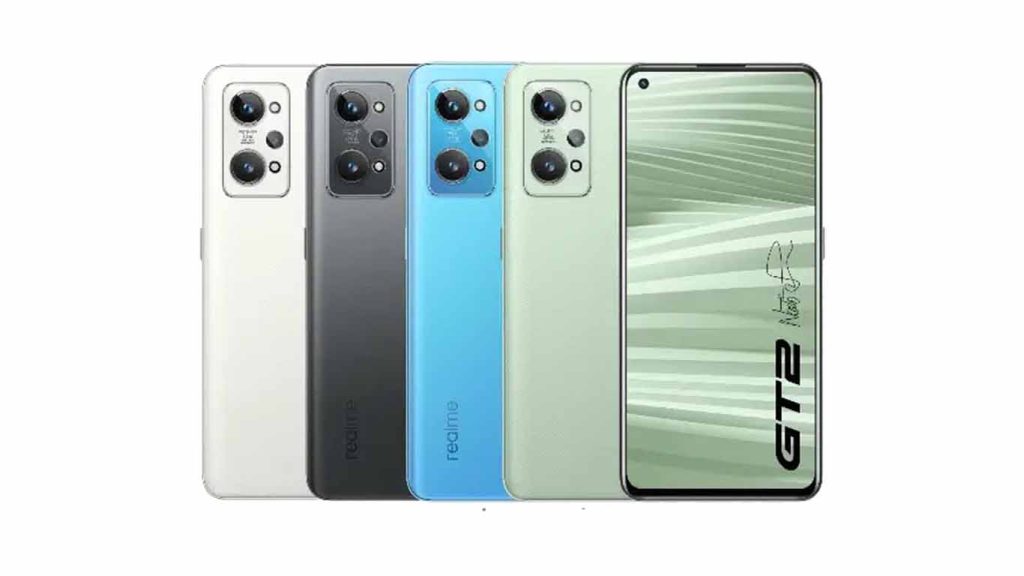
Starting from the design, the Realme GT Neo 2 flaunts a 6.62-inch display with Full HD+ resolution. The Samsung E4 AMOLED panel boasts a 120Hz refresh rate while the touch sampling rate is also approximately measured at 600Hz. It also has a peak brightness of 1300nits and a contrast ratio of 5,00,000:1. Further, the device supports DC Dimming and is protected by Corning Gorilla Glass 5 on the screen. Moving on to design, there is also a rectangular camera module with a matte finish rear panel. Since this is an OLED panel, there lies an in-display fingerprint sensor for security. Likewise, there is a punch-hole cutout with a selfie snapper above the screen. There are three color configurations – Black Mint, Blue, and Shadow Black. Among these, the Blue one is not available in Nepal.
Powering the Realme C21Y is Qualcomm Snapdragon 870 chipset. It is teamed up with up to 12GB of RAM and 256GB of internal storage while the former can expand up to 7GB virtually. On the software front, there is Android 11 running on top of the Realme UI 2.0. The device sports an 8-layer three-dimensional heat dissipation structure while the stainless-steel vapor cooling area lies integrated inside it. The brand also claims the latter to be the largest on the entire portfolio of Realme smartphones. Moreover, there is a diamond thermal paste as a cooling material in the handset. This also maintains 20% batter heat dissipation in comparison to the GT Neo. This is also one of the decent Realme mobile in Nepal with a reasonable price.
The most notable feature of the Realme GT Neo 3 is the 150W UltraDart fast charging speed. It also has a dual-cell 4,500mAh battery that uses the two parallel charge pumps that has a conversion rate of 98.5%. You can also charge from 0 to 50% in just 5 minutes. There are 38 safety measures in the device that also limits the temperature of the device up to 43° Celsius. The battery also stays with 80% of the original capacity even after 1,000 charging cycles. However, you can also get the 80W SuperVOOC charging with a 5,000mAh battery just in case you are not interested in the earlier one. The latter can also charge the battery from 0 to 100% in just 32 minutes.
Powering the device is a MediaTek Dimensity 8100 processor based on a 5nm manufacturing process. Previously, its successor GT Neo 2 had Qualcomm Snapdragon 870 chipset. The Dimensity 8100 is also a “power-efficient” version of the Dimensity 9000. It integrates an octa-core CPU with four Cortex-A78 and four Cortex-A55 cores clocked at the speed of 2.85GHz and 2.0GHz respectively. Likewise, the graphics depart is handled by Arm’s Mali-G610 MC6. This is also one of the decent Realme mobile in Nepal with a reasonable price.
Realme GT Neo 3 Specifications
Body: 75.6 x 163.3 x 8.2mm, ~188 gm
Display: 6.7-inches AMOLED panel, 120Hz refresh rate, Up to 1000Hz touch sampling rate, Gorilla Glass 5, 100% DCI-P3
Starting with the display, there is a 6.7-inch 2K Samsung E4 AMOLED screen in the Realme GT 2 Pro. It also boasts the standard refresh rate of 120Hz and has 1B colors alongside HDR10+ contents and 1400nits of peak brightness. Further, there is 1440×3216-pixels resolution and 509 PPI density. In addition, the whole display is protected by Corning Gorilla Glass Victus. Not to forget, this is also the world’s first phone with a bio-based design. Realme has also collaborated with Naoto Fukasawa for the Master Paper Design. The phone weighs 189/199 grams (depending on color) while embedding the dimension of 163.2×74.7×8.2mm. There are four different color configurations – Paper White, Paper Green, Steel Black, and Titanium Blue.
Since Realme GT 2 Pro is the brand’s flagship, it integrates Qualcomm Snapdragon 8 Gen 1 chipset based on a 4nm manufacturing process. There is an octa-core CPU core with one Cortex-X2, three Cortex-A710, and four Cortex-A510 cores clocked at the speed of 3.00GHz, 2.50GHz, and 1.80GHz respectively. Likewise, there is Adreno 730 handling the graphics depart. As per memory, there are also the four different configurations – 8/128GB, 8/256GB, 12/256GB, and 12/512GB of UFS 3.1. However, only two of these are available in the global market.
Unfortunately, there is no microSD card slot to further expand the internal memory. On the software front, the phone boots on Android 12 alongside Realme UI 3.0. Moreover, there is a 4129mm2 Vapor Chamber cooling surface and a 36,761mm2 heat dissipation layer to keep the device’s core temperature in check. This is also one of the decent Realme mobile in Nepal with a reasonable price.
Realme GT 2 Pro Specifications
Body: 163 x 74 x 8.2mm, 189 gm
Display: 6.78″ E4 AMOLED panel, 10-bit colors, 120Hz adaptive refresh rate, up to 1000Hz touch sampling rate, HDR10+
Resolution: QHD+ (3216 x 1440 pixels)
Display Protection: Corning Gorilla Glass Victus
Chipset: Qualcomm Snapdragon 8 Gen 1 (4nm Mobile Platform)
As Realme re-entered Nepal recently with a reasonable price considering what they cost in the Indian market. And if you are interested in any of the Realme Mobile, then we have listed all their price individually above.
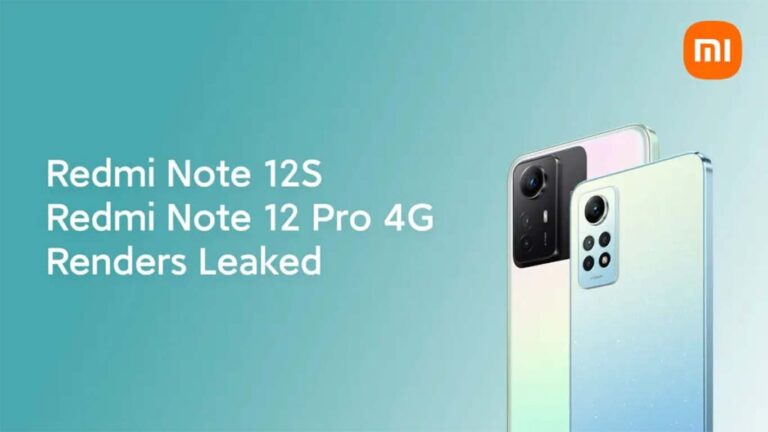
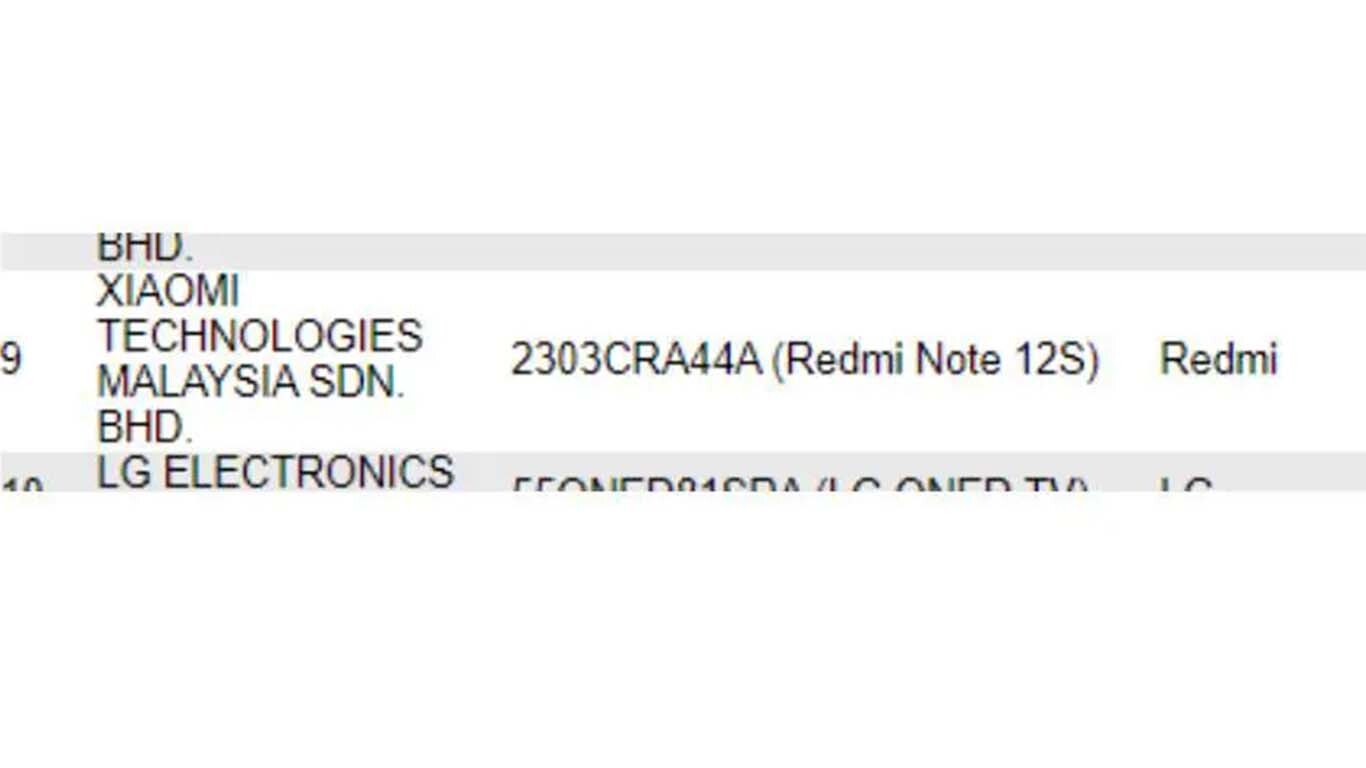
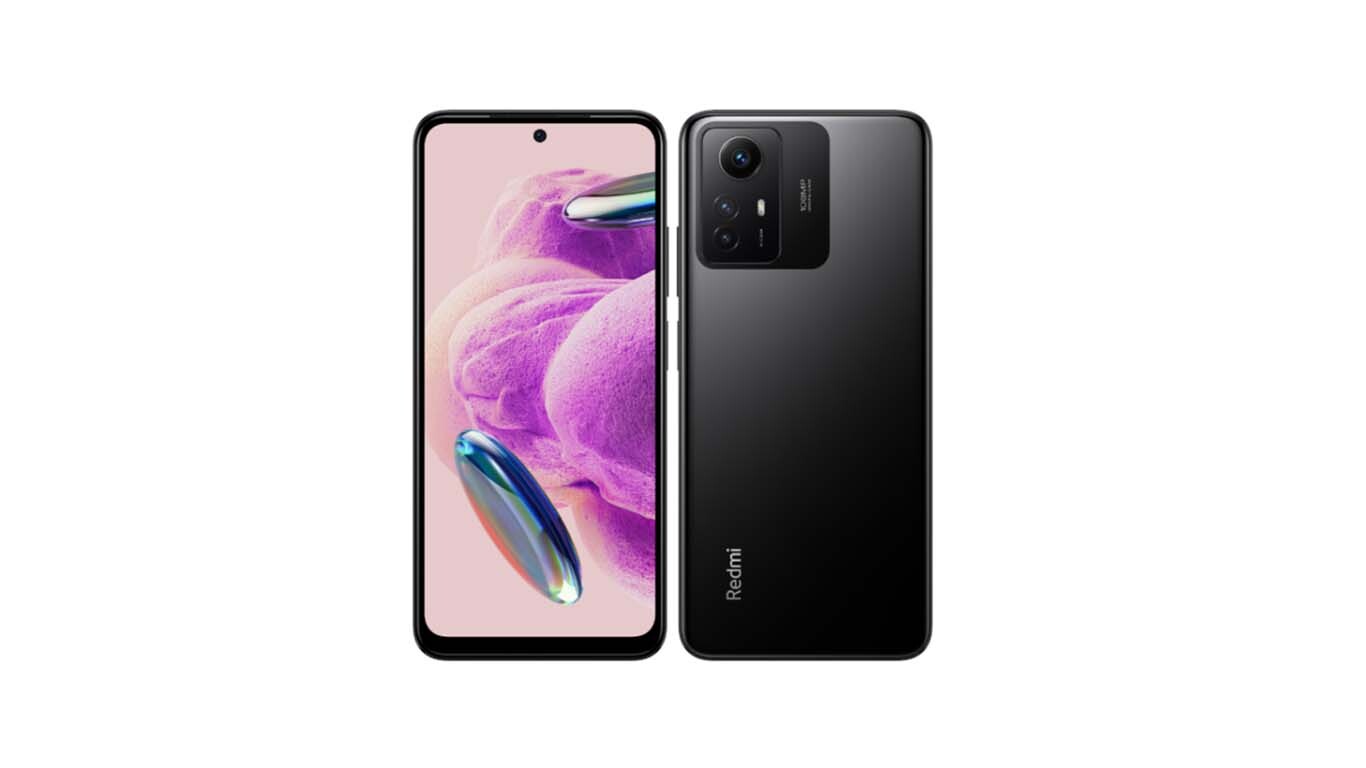
Redmi Note 12 S is an addition to Redmi’s Note 12 Series. We doubt that the smartphone is launching very soon in the International Market. Redmi Note 12S has appeared on the SIRIM database. The listing mentions that the smartphone with model number 2303CRA44A is indeed the Redmi Note 12S.
Here, We have summarized all the available information about the smartphone. Let’s dive in.
Redmi Note 12 S Overview
Design And Display
Rumors suggest that the Redmi Note 12 S may feature a stunning AMOLED display with 68B colors and a fast refresh rate of 120Hz. The display is also said to support Dolby Vision and HDR10+ for an exceptional viewing experience with vibrant colors and contrast. With a peak brightness of 1100 nits, the phone’s screen should be visible even in bright outdoor conditions.
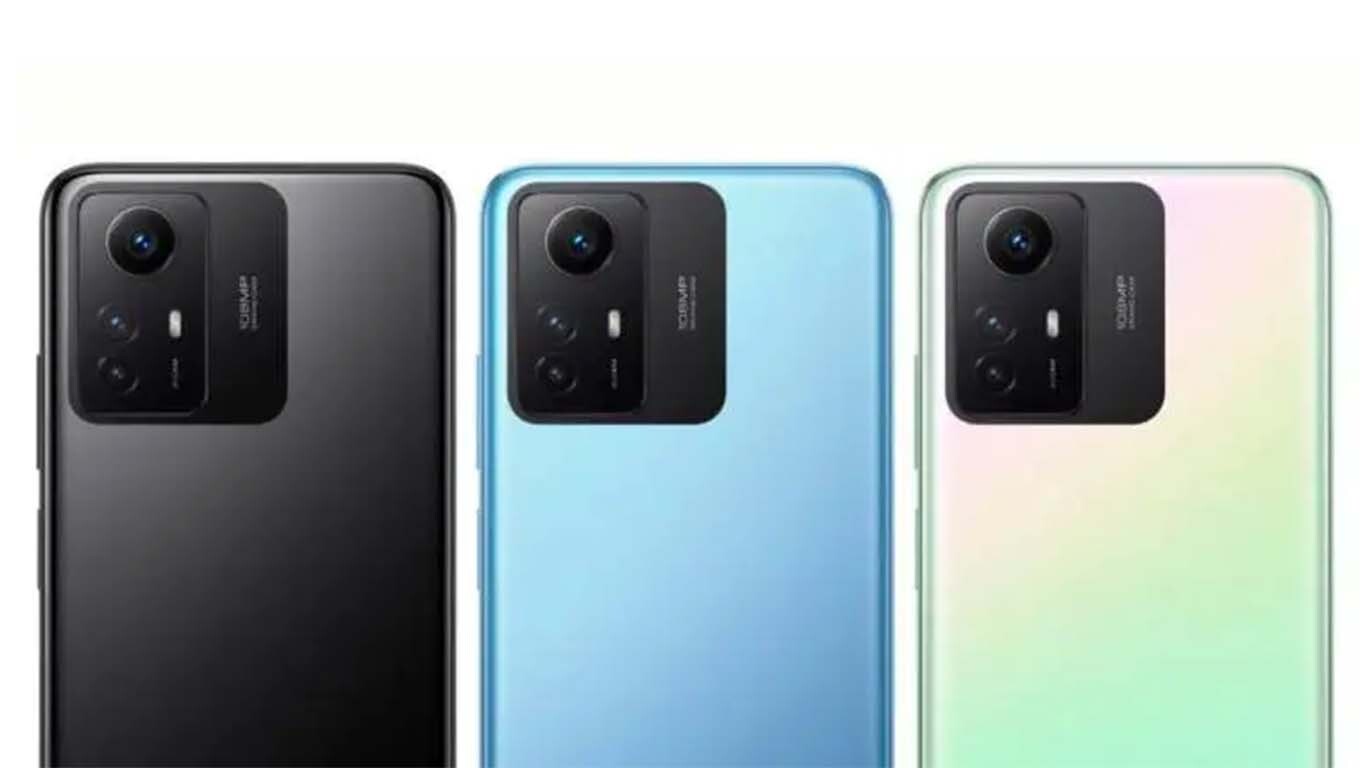
The display size is expected to be 6.28 inches, with an impressive screen-to-body ratio of around 89.2%. The resolution of 1080 x 2400 pixels and a density of 419 ppi should provide sharp and clear visuals. Additionally, Corning Gorilla Glass Victus is rumored to be included to protect the display from scratches and cracks. It comes with different color options; Black, white, peach blue.
Camera Features
The Redmi Note 12 S features a triple camera setup with a 50 MP primary lens. This primary lens is rumored to have an f/1.9 aperture, 24mm wide angle, 1/1.28″ sensor size, Dual Pixel PDAF, and OIS for stabilization. Along with the primary lens, the camera setup is rumored to include a 13 MP ultra-wide lens with an f/2.4 aperture and 123˚ field of view, as well as a 5 MP telephoto macro lens with an f/2.4 aperture and AF for close-up shots.
The camera is also expected to have a Leica lens, Dual-LED dual-tone flash, HDR, and panorama modes. If these rumors are true, the smartphone’s camera would be capable of recording video in 8K at 24fps, 4K at 30/60fps, 1080p at 30/60fps, 720p at 1920fps, and gyro-EIS for stable footage.
Battery
The Redmi Note 12 S is expected to come with a non-removable Li-Po 4500 mAh battery. This battery is expected to support fast charging technology with a 67W wired charging option, which is capable of charging the phone to 100% in just 42 minutes, as advertised.
Additionally, the phone may have a 50W wireless charging option, which can fully charge the battery in around 57 minutes. The phone is also speculated to have a 10W reverse wireless charging feature, which means that it can charge other devices wirelessly using its own battery.
Overall, if these rumors are true, this smartphone’s battery would offer users a powerful and versatile charging experience.
Performance
The Redmi Note 12 S smartphone is said to be powered by a Qualcomm SM8475 Snapdragon 8+ Gen 1 (4 nm) chipset. If this is true the smartphone can offer high-performance capabilities. The CPU is rumored to be an octa-core processor consisting of 1×3.19 GHz Cortex-X2, 3×2.75 GHz Cortex-A710, and 4×1.80 GHz Cortex-A510, providing efficient processing speeds for various tasks. The Adreno 730 GPU is also expected to offer smooth graphics and support for demanding applications such as gaming and video editing.
The phone is expected to run on Android 12 with MIUI 13, offering an optimized user experience.
Redmi Note 12 S Specifications
Display: 6.43 inches, AMOLED, 90Hz, 1080 x 2400 pixels, 20:9 ratio
Camera: – 50 Megapixel, (wide), PDAF, f / 1.8 aperture – 5 Megapixel, (ultra-wide), f / 2.2 aperture – 2 Mega pixels, (Macro), f / 2.4 lens – 2 Mega Pixel, (Depth Sensor), f / 2.4 lens
Battery: 5000 MAh, Lithium Polymer, Non-removable, Fast charging 25W
There has not been any official information about the device’s launch in the Nepalese market yet. According to our speculation the Xiaomi Redmi Note 12S’s expected price start is NPR. 21,800 to NPR. 26,160. We will be updating this article as soon as we get any information about this devices launch.
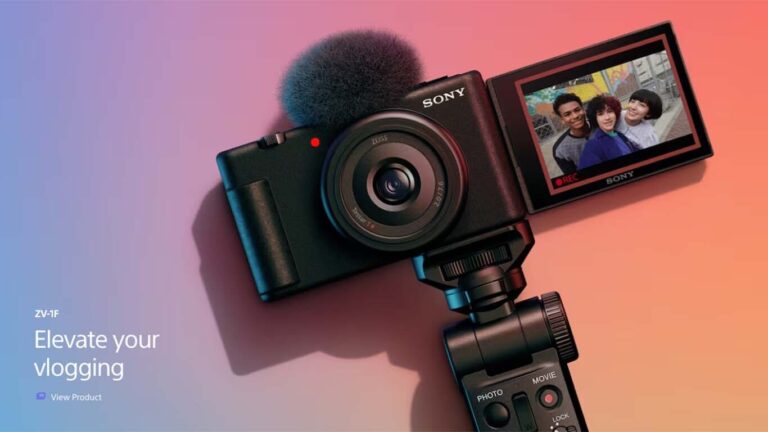
Sony has announced the ZV-1F, a camera made for those who wish to create content more effectively than they can with smartphones. In Sony’s ZV lineup of vlogging cameras, it is the second item.
We have covered Sony ZV-1F’s specifications, features, anticipated price, and accessibility in Nepal in this article.
Sony ZV-1F Overview;
Display And Built
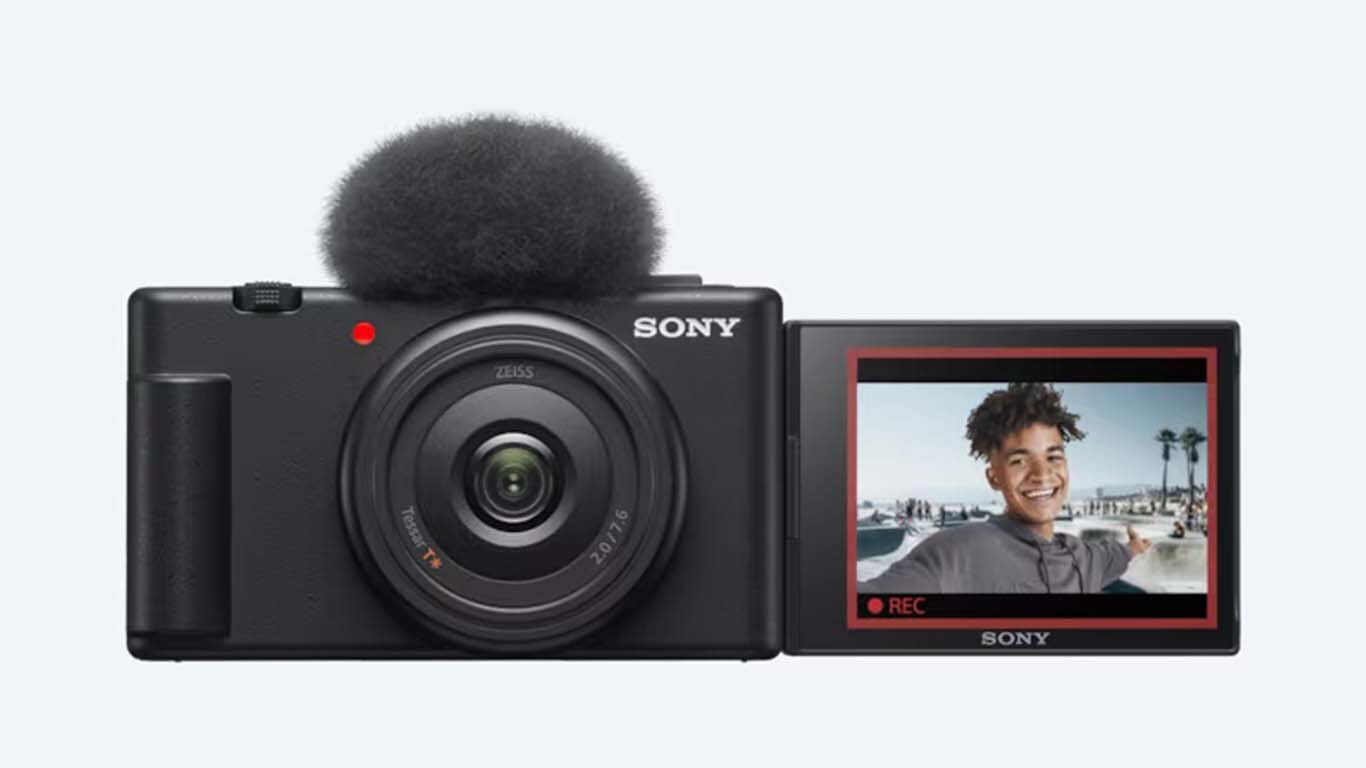
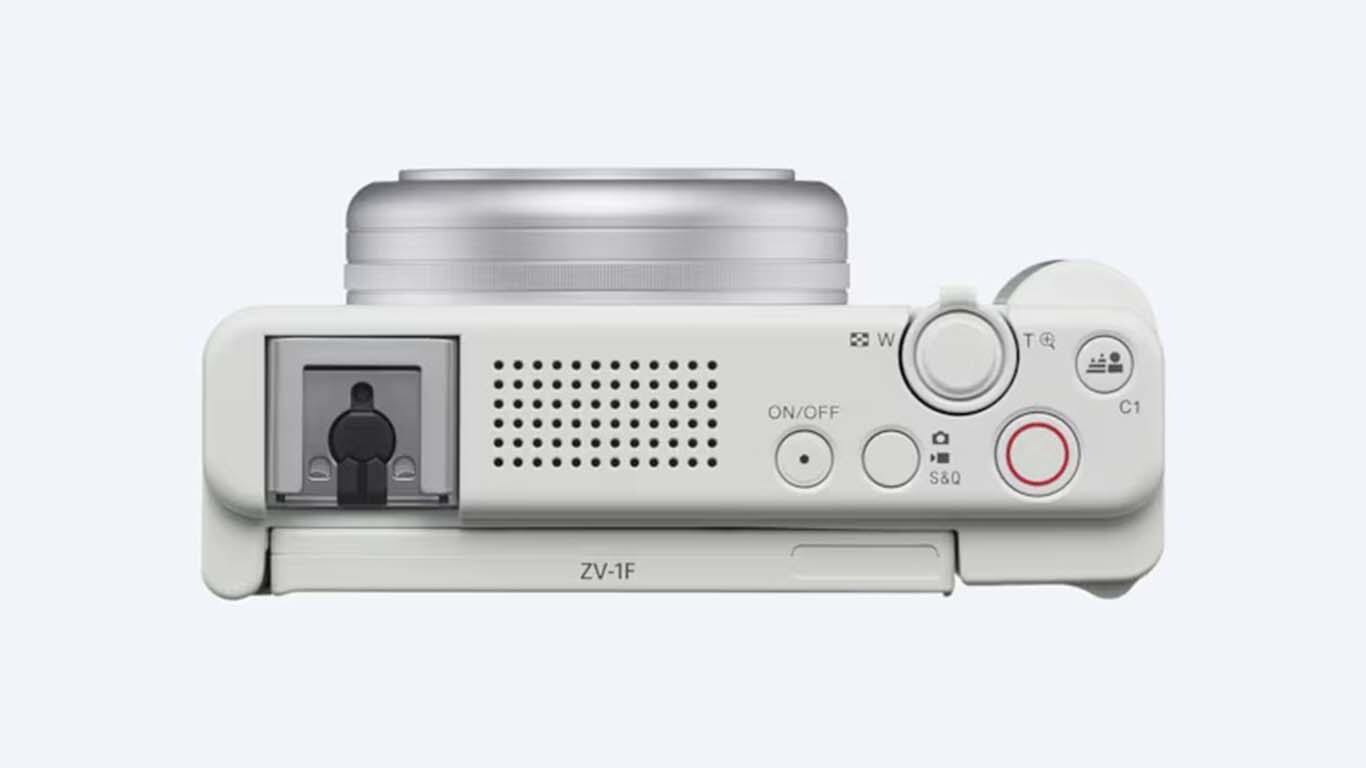
The ZV-1F is a mirrorless camera that is relatively small. The camera is available from Sony in black-and-white color options. The body weighs about 256 grams and is comprised of metal and plastic.
The camera boasts a built-in fully articulated display that makes it ideal for vlogging and self-portraits. The screen has a 4:3 aspect ratio, TFT LCD technology, and allows touch input.
Vlogging
Like its predecessor, the Sony ZV-1F makes use of a 20.1MP Type-1 sensor. It does, however, have an ultrawide 20mm lens and offers 1.5x and 2x digital zoom at 1080p. Although the camera includes electrical stabilization, there is no built-in optical stabilization. Turning it on, however, will only allow for a 1.23x cut of the zoom.
The ZV-1F can record 1080p films at 120 frames per second and 4K videos at 30 frames per second. For better selfie-style videos, it also offers a Background Defocus function paired with Face Priority Auto Exposure (AE).
Users can take advantage of features like Eye AF, SteadyShot, and S&Q, which enables users to shoot 60x hyperlapse in HD, because it is a Sony camera. Short videos under 60 seconds can be exported directly to a smartphone using Sony’s Shot Mark app.
Rest of the specs
Additionally, the ZV-1F has integrated directional microphones and supports screw-on neutral density filters. For voice isolation, the microphones have a forward bias. The camera also comes with a detachable windshield.
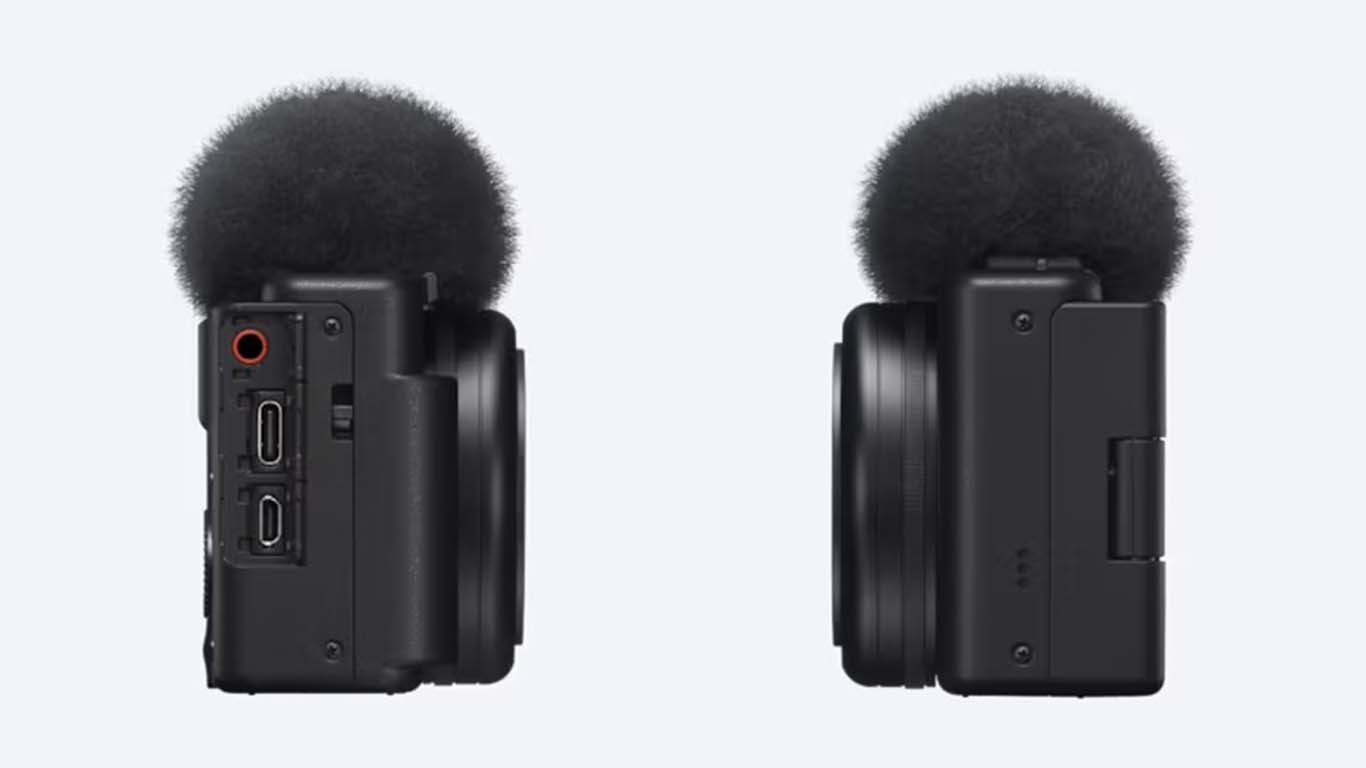
For connectivity, it also has Wi-Fi, Type-C, tiny HDMI, and NFC. The Imaging Edge Mobile app can be used to manage wireless tripod grips, such as the GP-VPT2BT, which are another option for customers.
The Sony ZV-1F is all set to start selling at the price of USD500 by the month of October. Likewise, we can expect the camera to cost up to NRS 80,000 when it launches in Nepal. We will be updating this article as soon as we get more official information. Stay Tuned!
GTA 6 is on the waitlist of millions of fans worldwide. Given its popularity, the upcoming GTA version is anticipated to be even more captivating. Rockstar Games has published two console versions in the previous ten years.
We anticipate doing car heists, robberies, and engaging in other criminal activity in the upcoming version, so the new one will undoubtedly be more enjoyable. This article will cover some significant elements of GTA 6’s upcoming release.
When is GTA 6 Releasing?
GTA 6’s release date has not yet been made public by Rockstar Games, but there is evidence that it has been in production for close to three to four years. Sadly, the game is still in its early phases of development because several crucial components are missing. We may anticipate the release of GTA 6 sometime in the next year given the prior releases.
The likelihood of the game being published during the holiday season of the next year is higher. Industry insiders speculate that Rockstar Games might push it back to 2026. We don’t yet have a confirmed date.
Rockstar Games hasn’t said where GTA 6 will take us, but there are several speculations circulating that point to a wide range of settings.
The most likely location for game is Vice City, Rockstar’s imagined Miami—or at the very least, a fake Miami. Vice City will allegedly appear in game according to the aforementioned Bloomberg article, despite Rockstar’s allegedly more ambitious initial ambitions.
According to a report, the game initially featured sizable regions that were based on both North and South America. Although “the game’s world remains large, with more interior locations than previous Grand Theft Auto games,” it appears that the scope was reduced to concentrate on Vice City and its neighborhood.
But the study claims that the map won’t stay static. Rockstar intends to add more cities and interior areas to it after it is released, and these updates are expected to be far larger than those GTA 5 received. The goal is to reduce unpleasant overtime during production and allow more room to design the game’s enormous environment. It also implies that once the game is available, you’ll have new places to discover. Rockstar intends to “regularly” introduce new locations and quests to the game, offering us new places to explore while potentially reducing studio crunch, according to Bloomberg.
WhatsApp is without doubt the most used messaging application of the current time. WhatsApp is regularly including several new features in the application such as Meta Avatars and more. The platform is now working on adding a new feature that will allow users to lock desired chats. This will allow users to lock private chats instead of the entire application.
Individual Chat Lock on WhatsApp; How Does It Work?
Users will be able to lock particular chats and groups on the contact or group information screen. A chat that has been locked is moved to that section and can only be accessed with the user’s fingerprint or passcode.
Additionally, the function stops media files received in a secured chat from being automatically saved to the device’s gallery, guaranteeing that private images and videos are kept out of the public eye. In addition, if a user tries to view a locked conversation without having been properly authenticated, they will be prompted to clear the chat first.
The technology, which is still under development, will give users who want to keep their conversations private from prying eyes an additional degree of security and privacy.
Although there has been no official announcement or release date for WhatsApp, it is likely that the feature will be there in a future edition. With the addition of this functionality, WhatsApp’s security features will now allow users to lock the entire app with biometric authentication.
Voice chat, edit texts, brief video messages, disappearing messages, and other features are just a few of the new features and platform enhancements that WhatsApp is continually introducing. One of the most widely used messaging apps in the world, the platform boasts more than 2 billion users worldwide.
Are you ready to test out the new feature? We sure will update this article after we test out the new feature. Stay Tuned!




![Realme Mobile Price in Nepal -2023 [Updated]](https://youtechnepal.com/wp-content/uploads/2023/04/Reamle-Mobile-Price-in-Nepal-e1681128825651-768x432.jpg "Realme Mobile Price in Nepal -2023 [Updated]")